

The guide explains licensing jurisdictions, offer terms, GamStop status, safety checks and the limits of legal recourse.
What “UKGC-Licensed” Means in the Casino Market
A UKGC-licensed casino is an online gambling service operating under a licence issued by the UK Gambling Commission. The label identifies who oversees the operator; it is not simply a description of the casino’s location, website language or intended audience. A company may be based outside Britain and still need a Commission licence if it offers real-money gambling to customers in Great Britain.
The distinction is therefore between regulatory status and branding. A site can display sterling, use English and accept customers who live in the UK without being licensed by the UKGC. Those features do not establish that the Commission supervises it. Conversely, the operator’s base of operation does not, by itself, determine whether a UKGC licence is required. For services offered to customers in Great Britain, the relevant question is whether the operator holds the required UK licence.
The Commission’s role is also narrower than a general endorsement of every part of a business. “UKGC-licensed” means that the operator falls within the UK Gambling Commission’s licensing framework for the relevant gambling activity. It should not be read as a guarantee that every transaction will be convenient, every term will be favourable or every individual dispute will resolve in a particular way. A licence describes regulatory oversight, not a promise about the financial outcome of gambling.
That distinction matters when comparing UKGC-licensed online casinos with a non-UKGC online casino. A non-UK-regulated casino, in the basic sense, is an online gambling site operating without oversight from the UK Gambling Commission. It may hold permission from another authority, or it may present a licence claim of some kind; neither fact makes it UKGC-licensed. The terms “licensed elsewhere” and “licensed by the UKGC” are not interchangeable.
Gibraltar Casino Licence and UK Regulation
Likewise, the phrase “not regulated by the UKGC” describes the relationship between a site and the British regulator. It does not necessarily mean that the site has no rules or oversight of any kind. That question depends on the operator’s arrangements and the authority it claims to answer to. The central point is more precise: without UKGC oversight, the Commission is not the regulator supervising that casino.
This is why the phrase “UKGC licensed online casino” should be treated as a statement about regulatory status rather than a quality ranking. It does not, on its own, tell a reader how generous an offer is, how quickly a payment will arrive or whether a particular game will produce a return. Those are separate matters. The licence answers a prior question: whether the operator is within the UK Gambling Commission’s regulatory system.
A list of UKGC-licensed online casinos is useful only if it is understood in that limited sense. It is a list of operators with the relevant UK regulatory status, not a ranking of their commercial terms. The wording “which online casinos are licensed by the UKGC” also needs a defined market: the Commission’s licensing requirement applies to operators serving Great Britain, while the Gambling Act 2005 does not govern Northern Ireland. A site’s claim to serve British customers is not a substitute for identifying its regulatory position.
The distinction can be stated plainly:
- A UKGC-licensed casino is overseen by the UK Gambling Commission under the applicable British licensing framework.
- A non-UKGC casino operates without that Commission oversight, even if it refers to a licence issued elsewhere.
- A casino’s name, design, currency display or marketing language does not establish which category it belongs to.
For a non-UKGC online casino in the UK market, the important phrase is “without UKGC oversight,” not “UKGC-approved under another name.” A foreign licence does not become a British licence through the operator’s website or its willingness to accept British customers. The regulatory label must correspond to the authority that actually supervises the operator.
The same distinction applies whether the search is for one non-UKGC licensed online casino or a group of them. The term identifies sites outside the UK Gambling Commission’s oversight; it does not settle whether their claimed permissions are valid, what markets those permissions cover or what conditions apply. Those are separate questions from the definition itself.
In short, “UKGC-licensed” is a jurisdictional and regulatory description. It means the casino operator is subject to the UK Gambling Commission’s licensing framework for services offered in Great Britain. “Non-UKGC” means that this oversight is absent. Keeping those meanings separate prevents a foreign licence, a British-facing website and a UK regulatory authorisation from being treated as the same thing.
Regulatory Status
A UKGC licence describes regulatory oversight and the operator’s inclusion in the British licensing framework; it is not a quality ranking or a guarantee of financial outcomes.
How Non-UKGC Casino Sites Operate—and Where the Terms Can Differ
For deposits and withdrawals, the important difference between UKGC-licensed casino sites and casino sites without a UKGC licence is often the transaction terms attached to the account. Non-UKGC casino sites may set fewer payment restrictions and process payouts more quickly, but that does not establish a common standard across operators. The available methods, processing route and withdrawal conditions can all affect when money leaves an account and when it reaches a bank or payment wallet.
Deposits: method and route
Non-UKGC casino websites may accept credit cards, e-wallets, bank transfers and cryptocurrency. Some use alternative payment processors, so the name shown during a transaction may not match the casino brand. That can affect how a payment appears in an account statement and which route is used for a later withdrawal. A deposit method being available does not, by itself, establish that the same method can be used to withdraw funds.
Crypto payments can bypass the UK ban on gambling deposits funded by credit card. Some specialist reviews have also reported casino deposits being charged to a mobile phone bill or taken from a prepaid balance. That should be treated as a reported option, not as a standard feature of non-UKGC casino sites: payment methods can vary by operator and change over time.
Casino Without a UK Licence: Rules and Risks
A deposit is only one part of the transaction. The terms may distinguish between the method used to add funds and the route available for cashing out. The practical effect is that a convenient way to pay does not necessarily determine the speed, cost or method of a withdrawal. Each stage has its own conditions.
Withdrawals: timing is not uniform
Published accounts of payout timing for casinos outside the UKGC differ. Some describe withdrawals arriving in as little as 24 hours to 5 business days, with the payment method affecting the wait. Other reports say a withdrawal can take three or four weeks. These figures are not a single dependable timetable: they describe a range of reported outcomes, and the longer delays have no regulatory clock for enforcement.
A displayed processing estimate also does not necessarily mean the funds have reached the receiving account. A casino may need to process a request before a payment provider or bank completes its part of the transfer. The distinction matters when comparing payment methods: the time quoted for a casino’s own handling may not cover the entire journey of the money.
The terms should therefore be read as conditions, not as a promise of arrival by a particular date. A faster route may be available, but the reported variation means a payout estimate cannot be treated as a guaranteed deadline. For a casino site without a UKGC licence, there is no UKGC timetable enforcing the withdrawal process.
Withdrawal Timelines
Payout estimates for casinos outside the UKGC are not guaranteed deadlines, and there is no UKGC timetable enforcing the withdrawal process.
Limits and instalments
Some specialist reviews of non-UK-regulated casinos describe daily, weekly or monthly withdrawal caps. Where a cap applies, a large balance may have to be paid out in instalments rather than in one transfer. The size and frequency of those instalments depend on the operator’s stated terms; this is not a condition that can be assumed to apply to every non-UKGC casino website.
A limit can change the economics of a win even when the balance is available for withdrawal. If a cap restricts each payment, the full amount may take longer to reach the account, particularly where the operator processes withdrawals in stages. The distinction between a balance shown on screen and money actually received is therefore material.
What to compare in the payment terms
Before a deposit, the payment information and withdrawal rules need to be considered together. The relevant details are which deposit methods are accepted, whether the payout route must match the deposit route, how processing time is described, and whether withdrawal caps apply. The word “fast” has little financial meaning without those conditions.
For non-UKGC casino sites, flexibility at the deposit stage can sit alongside limits or longer waits at the withdrawal stage. Alternative processors, payment methods and payout schedules do not combine into one predictable market-wide system. The useful comparison is between the exact transaction terms attached to an account, rather than the headline availability of a payment option.
Non-UKGC Casinos in 2026: The Licensing Model and Its Jurisdictions
“Non-UKGC” describes a casino’s relationship with the UK Gambling Commission: the site operates without oversight from that regulator. It does not, by itself, say whether the casino holds a licence elsewhere. Many sites described this way are associated with a licence issued in another jurisdiction, but the label is not the name of a single licence or a single regulatory system.
Jurisdictions commonly associated with non-UK-regulated casinos include Malta, Curaçao, Gibraltar and Anjouan. These names identify places connected with licensing; they should not be read as interchangeable badges. A licence from one jurisdiction is not a UK Gambling Commission licence, and a list of possible jurisdictions does not establish which authority oversees any particular site.
Curaçao Casino Licence in the UK: What It Means
That distinction matters because licensing has two separate dimensions: where an operator’s licence comes from, and which regulator oversees its activity in a given market. A casino may be linked to a regulator outside the UK while still having no UKGC oversight. Calling it “licensed” can describe the first point without changing the second.
The phrase “non-UKGC casino” is therefore a broad category rather than a precise description of an operator’s status. It groups together sites that do not sit under UK Gambling Commission oversight, even where their licensing arrangements differ. The category says less than a licence document would: it does not identify the issuing authority, the company named on the licence or the scope of that authorisation.
The jurisdictions in this category should not be treated as one offshore regulator with several office locations. Malta, Curaçao, Gibraltar and Anjouan are distinct licensing jurisdictions. Their names signal different regulatory origins, not a shared set of rules. Without establishing the relevant authority and licence, the jurisdiction label alone cannot support a conclusion about the standards applied to a particular casino.
Malta
A distinct licensing jurisdiction associated with non-UK-regulated casinos.
Curaçao
A distinct licensing jurisdiction associated with non-UK-regulated casinos.
Gibraltar
A distinct licensing jurisdiction associated with non-UK-regulated casinos.
Anjouan
A distinct licensing jurisdiction associated with non-UK-regulated casinos.
This also explains why “non-UKGC licensed casinos” can be a misleadingly compact phrase. It may be used to refer to a casino licensed outside the UK, or more loosely to a site that is simply not regulated by the UKGC. Those are related descriptions, but they are not identical. A site’s absence from UKGC oversight does not, on its own, prove that it holds a foreign licence.
For the same reason, “non-UKGC casinos UK” is not a regulatory category. It combines the location of the intended audience with the regulator absent from the arrangement. The wording does not reveal which foreign authority is involved or what permission the operator holds. The jurisdiction named in a casino’s material is a starting point for understanding its licensing model, not a substitute for the underlying authorisation.
A useful way to read the terminology is to keep three questions separate: whether the UK Gambling Commission oversees the casino, whether another jurisdiction is named as its licensing authority, and what that authority’s licence covers. The first defines the “non-UKGC” part. The second identifies a possible regulatory origin. The third cannot be inferred merely from a country or territory name.
Accordingly, Malta, Curaçao, Gibraltar and Anjouan are examples of jurisdictions associated with non-UK-regulated casinos, not a ranking and not a guarantee of equivalent oversight. The shared feature is the absence of UKGC supervision; the licence source may vary. The jurisdiction label should be read as context, not as proof that two casinos operate under the same conditions or offer the same level of regulatory oversight.
Malta MGA-Licensed Online Casinos in the UK
Assessing the Cost of a Casino Offer
A headline bonus is not the amount available to withdraw. Its value depends on the wagering basis, which bets count towards the requirement, any cap on winnings and the time allowed to use the offer. Those conditions determine both the amount that can survive the terms and how long it may remain locked.
A specialist casino review reports offshore welcome offers with wagering requirements of 35x or more. That figure is not enough to calculate the required play: the terms must say whether the multiplier applies to the bonus, the deposit and bonus together, or another amount. One specialist review describes a 40x requirement that may be attached to the bonus alone, the combined deposit and bonus, or the bonus and free spins together, depending on the offer. The same multiplier can therefore produce a different turnover obligation.
The working calculation is:
eligible amount × wagering multiplier = required qualifying stakes
The eligible amount is the critical input. If the multiplier applies only to bonus funds, the deposit is outside that calculation; if it applies to the combined amount, the required stakes rise. The displayed bonus can look unchanged while the amount of play needed before withdrawal changes substantially. Game contribution rules matter too: a wager that contributes only partly, or does not qualify, cannot be counted as though it clears the requirement in full. The offer terms need to specify which games count and how.
Free spins add a separate set of conditions. A specialist casino review reports wagering requirements of 30–50 times the resulting winnings, alongside withdrawal caps of £5–£50. These are reported terms, not a dependable market-wide schedule; the offer itself must establish the applicable figures. A cap may limit the amount payable even when play has generated a larger balance, while a wagering condition can require further qualifying stakes before any eligible winnings are released. The displayed winnings and the withdrawable amount are therefore not necessarily the same sum.
Bonus Calculation
Identify Eligible Amount
Determine if the multiplier applies to the bonus alone or the combined deposit and bonus.
Apply Wagering Multiplier
Multiply the eligible amount by the wagering requirement (e.g., 35x or 40x) to find the required qualifying stakes.
Check Game Contribution
Verify which games count toward the requirement and if any contribute only partially.
Note Caps and Expiry
Identify any maximum winnings caps and the time limit before the offer expires.
Expiry changes the calculation by imposing a time boundary. A specialist casino review reports free-spin packages expiring within 24–72 hours. The exact offer terms determine when that period starts and what happens to unused spins or unsettled winnings when it ends. A short window can make an offer less usable where the required play cannot be completed in time. An attractive nominal value has little practical value if its conditions cannot be met before expiry.
Before assigning a cash value, the terms should be read as a sequence: identify the amount the multiplier applies to; check which games and wagers count; establish any cap on winnings; then note the expiry and the consequence of missing it. The result is not a forecast of a win. It is a limit on when, and how much, a balance could become eligible for withdrawal if the conditions are satisfied.
Descriptions such as “best”, “trusted” or “new” do not resolve any of these calculations. A new non-UKGC casino may advertise a large welcome package, but the offer’s value still turns on its written conditions, not its label. Nor does the phrase “UKGC casino” make an offshore promotion subject to UKGC offer rules. For any site, the decisive figures are the ones attached to that specific promotion, and terms may differ between offers.
GamStop and Casinos Outside the Scheme
GamStop is the UK Gambling Commission’s self-exclusion scheme. Casinos that are not part of it do not receive or apply a GamStop exclusion. As a result, registering with GamStop does not block access to those sites.
Non-GamStop Curacao Casino Sites: UK Rules Explained
That distinction matters when self-exclusion is being used to prevent gambling across participating services. Its effect does not extend to a casino outside the scheme: the account may remain accessible, and the site is not covered by the exclusion request. “Not blocked by GamStop” describes that limit; it does not mean the casino has been approved by the Commission or that it provides an equivalent safeguard.
The labels can be confusing. Phrases such as “UKGC casino outside GamStop” combine two separate ideas: UKGC licensing and participation in the self-exclusion scheme. A site’s relationship with GamStop cannot, by itself, establish its licensing status. Nor does being outside the scheme make a casino part of it. The practical point is narrower: GamStop does not control access to casinos that are not included in its scheme.
For someone relying on self-exclusion, that leaves a gap in coverage. A block applied through GamStop cannot be treated as a universal barrier to online gambling, because sites outside the scheme are not bound by that block. The same applies when a site is described as “not affected” by GamStop: the wording refers to the scheme’s reach, not to a stronger form of protection.
Self-exclusion is therefore only effective within the services covered by the relevant scheme. A person who depends on GamStop to restrict access should account for the fact that a casino outside it may still be reachable. This is a material limit, not a technical footnote: the exclusion request cannot perform its intended function on a site that does not participate.
GamStop Limit
A GamStop exclusion does not block access to casinos outside the scheme; these sites are not bound by the exclusion request.
The distinction also affects how claims about exclusion should be read. A casino may describe itself as outside GamStop, but that statement says only that it is not included in the scheme. It does not show that a GamStop registration will prevent account access there, and it does not establish that the casino offers another measure with the same scope. Any separate controls would have to be assessed on their own terms.
“Casinos not on GamStop” is thus a description of scheme coverage, not a guarantee about licensing or player protection. For people relying on the scheme, the consequence is direct: its exclusion does not extend to those casinos.
What a Non-UK Licence Does—and Does Not—Regulate
A licence is evidence of oversight within a particular regulatory framework; it is not a general authorisation to serve customers in every country. An Anjouan casino licence, for instance, does not permit an operator to offer gambling in the United Kingdom or in other markets that Anjouan lists as restricted. The licence’s existence and the operator’s authority to serve a specific market are separate questions.
That distinction matters when assessing non-UKGC-regulated casinos. A site may display a licence claim prominently, but the claim alone does not establish that the operator is authorised to serve customers in Britain. Nor does it show that the protections or complaint procedures associated with UKGC-regulated casinos apply. Marketing language can describe the licence an operator holds; it cannot enlarge the licence’s geographic scope or substitute for a different regulator’s requirements.
Anjouan’s arrangements illustrate the limits. Casinos operating under its framework are not required to join GamStop, the UK self-exclusion scheme. They are also not obliged to offer an independent dispute process equivalent to the alternative dispute resolution services approved for UKGC-regulated operators. A licence claim should therefore not be read as a promise of access to those systems.
There is a complaint-handling requirement, but its meaning is narrower than independent adjudication. Under Anjouan’s framework, the operator must respond to a complaint within 30 calendar days. That places a time obligation on the casino to reply; it does not create an independent body to decide whether the reply is fair, require a particular outcome, or provide the same kind of external dispute route available through UKGC-approved services. A response deadline and an independent decision-making process are different safeguards.
Anjouan Framework
Under Anjouan’s rules, operators must respond to complaints within 30 calendar days, but there is no requirement for an independent dispute resolution process.
This is a useful distinction when reading non-UK casino reviews or a non-UK casinos list. A review may report that a site claims an Anjouan licence, but that fact does not establish that the licence authorises British-market activity or that an independent adjudicator will handle a dispute. Those are separate matters, and should not be compressed into a broad label such as “licensed” or “regulated.” The wording may be accurate while still leaving the practical limits unstated.
The same care applies to statements about complaint support. An operator’s own process may receive and answer complaints, but that is not the same as an external service with authority to review the dispute independently. The existence of a route for contacting the casino does not change the boundaries of its licence or turn its response into an independent ruling.
For anyone comparing a non-UKGC-regulated casino with a UKGC-regulated casino, the relevant question is not simply whether a licence is named. It is what that licence permits and what recourse it requires. In the Anjouan example, the framework sets a response period for operator complaints, while leaving out an independent dispute resolution route comparable to the UKGC-approved model. That difference is material: a licence can impose conditions without providing every protection associated with another regulator.
How UKGC-Licensed Casinos Differ
When considering non-UKGC-licensed casinos in 2026, payout timing is one practical detail to check. This list provides a quick reference to the stated withdrawal speed for each operator.
1. Amunbet
Payout speed: 1-3 business days Amunbet lists a payout speed of 1–3 business days.
2. Jetsetspins
Payout speed: 1-3 business days Jetsetspins lists a payout speed of 1–3 business days.
3. Dieselwin
Payout speed: 1-3 business days Dieselwin lists a payout speed of 1–3 business days.
4. WinBeast
Payout speed: 1-3 business days WinBeast lists a payout speed of 1–3 business days.
5. x3bet
Payout speed: 1-3 business days x3bet lists a payout speed of 1–3 business days.
6. Britsino
Payout speed: 1-3 business days Britsino lists a payout speed of 1–3 business days.
7. EvoSpin
Payout speed: 1-3 business days EvoSpin lists a payout speed of 1–3 business days.
8. Chanze
Payout speed: 1-3 business days Chanze lists a payout speed of 1–3 business days.
9. SpinFormula
Payout speed: 1-3 business days SpinFormula lists a payout speed of 1–3 business days.
10. BeOnBet
Payout speed: 1-3 business days BeOnBet lists a payout speed of 1–3 business days.
For a casino serving customers in Great Britain, the key distinction is not where its offices are based. The operator must hold a licence from the UK Gambling Commission. Moving the company’s base overseas does not remove that requirement when it continues to serve the British market.
That makes “UKGC-licensed” a description of regulatory authority, not a synonym for a British brand, a familiar payment method or a site that accepts sterling. A casino can be based outside Great Britain and still need a UK Gambling Commission licence to serve customers there. Conversely, a licence from another jurisdiction does not, by itself, meet the British requirement.
The comparison with a non-UK-regulated casino is therefore about the operator’s authorisation for the market. A non-UK-regulated casino operates outside the Commission’s oversight; it is not converted into a UKGC casino by presenting itself in English or accepting customers from Britain. The relevant boundary is the service being offered to customers in Great Britain, rather than the location suggested by a website’s branding.
This distinction matters when assessing claims of regulation. A stated licence may identify oversight in another jurisdiction, but it does not establish that the operator holds the authorisation required to serve Great Britain. The two questions are separate: which authority issued the stated licence, and whether the operator has the UK Gambling Commission licence required for this market.
Non-Gamban Casinos in the UK: What to Know
The term “UKGC-licensed casino” should consequently be read narrowly. It refers to an operator holding the relevant Commission licence, not simply to a casino that appears accessible from Britain. In 2026, the same market boundary applies: operators serving customers in Great Britain need the Commission’s licence regardless of where they are based.
This is a regulatory distinction, not a ranking of casinos or a measure of how attractive their offers appear. Commercial terms can vary, but they do not change which authorisation an operator needs to serve the British market. A licence issued elsewhere and a UK Gambling Commission licence are not interchangeable credentials.
Offshore Casino Safety: Protections, Funds and Verification Risks
A casino’s acceptance of a deposit says little about how an account will be handled when a withdrawal is disputed. At a non-UKGC casino, safeguards and data-protection requirements may be less stringent than those applying to UKGC-licensed real-money casinos. Deposit limits and self-exclusion tools should not be assumed to be available on equivalent terms.
Player funds are a separate risk from account access. An Anjouan casino licence does not guarantee that customer money is kept apart from the operator’s funds. If the business fails, players may rank as unsecured creditors, rather than having a protected pool of money set aside for their balances. A displayed account balance is therefore not the same as cash held in trust.
Fund Risks
An Anjouan casino licence does not guarantee the segregation of customer money from operator funds, meaning players may rank as unsecured creditors if the business fails.
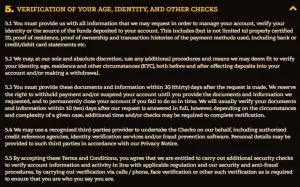
Verification can also become more demanding at the point when money is due. A specialist review has reported cases in which offshore operators requested notarised documents or a video call before processing a withdrawal. These steps should not be treated as standard across all operators, but they illustrate how an account check can become a condition attached to a pending payment. If documents are rejected or additional checks are required, access to the balance may be delayed.
That distinction matters when assessing claims of a safe or trusted non-UKGC casino in the UK. A polished site or a visible licence badge does not establish that funds are segregated, that checks will be proportionate, or that a disputed withdrawal will be resolved independently. The practical assessment rests on what the operator’s terms say about verification and funds, and on whether those protections are actually guaranteed by the licensing framework. For Anjouan-licensed sites, segregation is not guaranteed; a balance alone cannot remove that exposure.
Using a Casino Without a UKGC Licence: Legal Position and Recourse
The legal distinction is between the operator and the player. The Gambling Act 2005 is directed at businesses that provide gambling services to the UK market: an operator serving customers in Great Britain needs a UK Gambling Commission licence, wherever the business is based. A casino not licensed by the UKGC therefore cannot lawfully supply its service to that market under the UK framework.
VPN-Friendly Casinos in the UK: Rules and Risks
That does not make the player’s position equivalent to the operator’s. UK law does not expressly make it unlawful for a British citizen to use a gambling service licensed abroad, and a player does not commit a criminal offence simply by gambling on a site that lacks UK authorisation. The operator’s licensing obligation remains in place; the absence of a player offence does not grant the business permission to serve Great Britain.
A foreign licence also does not create UK regulatory recourse. If a dispute arises with a non-UK-regulated casino, the player cannot take the case to the UK Gambling Commission or use its complaints process as though the operator held a UK licence. The practical distinction is material: the player may not face criminal liability, yet still lack access to the UK regulator’s route for resolving a dispute.
The position is therefore not that every foreign-licensed service is authorised for the British market. It is that UK law places the relevant market-facing licensing duty on operators, while not expressly criminalising British citizens for using services licensed elsewhere.
Checking an Online Casino Licence
A licence badge and permission to serve a particular market answer different questions. A casino may identify a regulator, but that alone does not establish that its operator is authorised to accept customers in the UK. For a UKGC-licensed casino, check the operator against the UK Gambling Commission’s public register rather than relying on a logo or a statement on the site. The company name and the relevant licence entry should match the business taking the account.
Safety & Licensing for UK Online Casinos
For an Anjouan casino licence, check the public register entry, its expiry date and the operator’s legal name. A current entry still does not confer authority to operate in the United Kingdom: Anjouan’s rules exclude the UK, along with other restricted markets. The distinction is material. A licence can exist while the operator lacks permission to serve a particular jurisdiction.
The licence framework also indicates what oversight is absent. Anjouan’s requirements do not make random-number-generator testing, audits or segregation of player funds mandatory. A badge should therefore not be read as evidence that those safeguards have been independently verified or that funds are ring-fenced.
A check is complete only when both questions have been answered: which regulator, if any, licenses the named operator, and whether that operator has authority for the market it is serving. A regulatory logo answers neither question by itself.
Do non-UK-regulated casinos offer better bonuses than UK-licensed sites?
Not necessarily. Offshore bonuses can come with wagering requirements of 35x or more, so the headline offer alone does not show whether it is better value.
How do casinos outside GamStop operate?
They operate outside the UK Gambling Commission’s oversight and are not part of GamStop. Some hold licences from other jurisdictions, but those licences do not make them UKGC-regulated.
What is the biggest risk of playing at a non-UK-regulated casino?
You have fewer UK protections if something goes wrong: you lose access to the Financial Ombudsman Service and mandatory responsible-gambling tools. Anjouan-licensed casinos also do not provide an equivalent independent dispute-resolution route.
Are non-UK-regulated casinos legal for UK players to use?
UK law does not explicitly prohibit British citizens from using gambling services licensed in other countries, and players do not commit a criminal offence by gambling on an unlicensed site. However, operators serving customers in Great Britain are required to hold a UK Gambling Commission licence.
Are gaming sites not on GamStop permitted for UK players?
UK law does not explicitly prohibit players from using gambling services licensed elsewhere, and players do not commit a criminal offence by using an unlicensed site. Operators serving customers in Great Britain still require a UK Gambling Commission licence.
Can UK players legally play at casinos licensed in Anjouan?
UK law does not explicitly prohibit players from using gambling services licensed in other countries, and players do not commit a criminal offence by gambling on an unlicensed site. An Anjouan licence does not authorise the casino to operate in the United Kingdom.
Are Anjouan casinos connected to the GamStop self-exclusion scheme?
No. Anjouan-licensed casinos are not required to integrate GAMSTOP.
Material created by the team Lizaro