

An MGA licence covers an operator under Malta’s framework, while Great Britain requires UKGC authorisation for remote gambling services.
What an MGA Licence Does—and Does Not—Authorise in Great Britain
A Malta Gaming Authority (MGA) licence and a UKGC licence answer different regulatory questions. An MGA licence relates to the operator’s authorisation under Malta’s regulatory framework. It does not, by itself, give that operator permission to provide remote gambling facilities to consumers in Great Britain. For that market, the relevant authorisation is a licence from the UK Gambling Commission.
The distinction is about the service being offered, not the address shown on a company page. A casino may be based in Malta, hold an operating licence there, or describe itself as a Malta-licensed online casino. None of those facts replaces the UKGC licence required to serve customers in Great Britain. The same rule applies if the operator is physically located elsewhere: location does not remove the licensing requirement.
Two licences, two jurisdictions
The Malta Gaming Authority regulates operators under its own system. A Malta casino licence therefore indicates a relationship with that regulator, subject to the scope of the licence. It is not a portable authorisation that automatically applies in every country where a website can be opened.
The UKGC has a separate role in Great Britain. Operators providing remote gambling facilities to consumers in England, Scotland and Wales must hold a UKGC licence, regardless of where the business is established. A licence issued in Malta cannot be treated as an alternative route into the British market.
This is the central distinction behind phrases such as “online casino licence Malta” or “casinos licensed in Malta”. Those descriptions concern the claimed Maltese authorisation. They do not establish whether the operator is authorised for Great Britain. The two questions should not be collapsed into one simply because the same website is involved.
Physical location does not change the requirement
A Malta-based business may serve customers in different jurisdictions, but each market’s rules still matter. A company’s registered office, operational address, or the location of its servers does not determine which regulator’s authorisation is needed for a particular service. For remote gambling offered to consumers in Great Britain, the requirement follows the market being served.
Online Slots Not on GamStop: What the Label Means
That point also applies when the operator’s site is accessible from Great Britain. Technical access is not the same as regulatory permission. Nor does a Malta licence become a UKGC licence because the operator accepts a customer from Britain or presents its games in English. The authorisation question concerns the operator’s legal position, not the appearance or accessibility of its site.
A casino with a Malta licence may therefore be properly licensed under Maltese rules while still lacking the authorisation required to provide remote gambling to Great Britain consumers. Those statements are not contradictory; they refer to different jurisdictions. Conversely, the fact that a company has a presence in Malta does not establish that it holds an MGA licence at all. Location and licensing are separate matters.
What the MGA licence cannot establish
A Malta gaming licence can establish only what follows from that licence within the Maltese regulatory framework. It cannot, on its own, prove that an operator is entitled to target or serve the Great Britain market. It also cannot transfer the UKGC’s authority to the MGA or make the two regulators interchangeable.
For customers in Great Britain, the legal baseline is therefore not “licensed somewhere” but whether the operator holds the authorisation required for this market. An overseas licence may be relevant to the operator’s status in its issuing jurisdiction; it does not satisfy the separate UKGC requirement. The operator’s physical location does not alter that conclusion.
This is why “MGA licensed” and “authorised in Great Britain” should not be used as synonyms. The first identifies a Maltese regulatory status. The second concerns permission to provide remote gambling facilities to consumers in Great Britain and requires the relevant UKGC licence. A Malta-licensed online casino can meet the first description without meeting the second.
The distinction is narrow but material: an MGA licence is not a substitute for a UKGC licence. The place where a casino is based and the overseas regulator that licenses it do not displace the British requirement. For services offered to Great Britain consumers, the applicable authorisation is determined by the market, not by the operator’s location or the label attached to its Malta casino licence.
What “Best” Means When the Licence Is the First Test
For UK players considering Malta-licensed casino options in 2026, licensing and withdrawal terms are important points to check before choosing a site. The details available here are limited, so treat each entry as a brief reference rather than a complete assessment.
1. Amunbet
Payout speed: 1-3 business days The stated payout speed for Amunbet is 1–3 business days.
2. Jetsetspins
Payout speed: 1-3 business days The stated payout speed for Jetsetspins is 1–3 business days.
3. Dieselwin
Payout speed: 1-3 business days The stated payout speed for Dieselwin is 1–3 business days.
4. WinBeast
Payout speed: 1-3 business days The stated payout speed for WinBeast is 1–3 business days.
5. x3bet
Payout speed: 1-3 business days The stated payout speed for x3bet is 1–3 business days.
6. Britsino
Payout speed: 1-3 business days The stated payout speed for Britsino is 1–3 business days.
7. EvoSpin
Payout speed: 1-3 business days The stated payout speed for EvoSpin is 1–3 business days.
8. Chanze
Payout speed: 1-3 business days The stated payout speed for Chanze is 1–3 business days.
9. SpinFormula
Payout speed: 1-3 business days The stated payout speed for SpinFormula is 1–3 business days.
10. BeOnBet
Payout speed: 1-3 business days The stated payout speed for BeOnBet is 1–3 business days.
A casino can be well presented, offer a broad-looking lobby and describe itself as Malta-based. None of those features answers the first question for someone in Great Britain: does the operator hold the licence required to offer real-money gambling there? Without that condition, comparing bonuses, games or account features does not produce a meaningful shortlist. It compares offers before establishing whether the operator is authorised to serve the market.
For customers in England, Scotland and Wales, the relevant starting point is a UK Gambling Commission licence, commonly called a UKGC licence. Online operators offering real-money gambling in those nations must hold one. An MGA licence may be relevant to the operator’s position in Malta, but it is not the measure by which permission to serve Great Britain should be judged. “Best” therefore has a threshold meaning before it has a comparative one: an operator that does not meet the local licensing requirement does not qualify for a Great Britain-focused recommendation.
Licensing Requirement
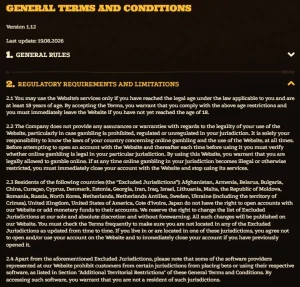
Providing remote gambling facilities to consumers in Great Britain without a UKGC licence is illegal, regardless of whether the operator holds an MGA licence.
This changes how phrases such as “best online casino in Malta” should be interpreted. They may refer to casinos based in Malta, regulated there, or simply marketed with a Malta connection. Those descriptions do not define a category of suitable casinos for British customers. A list of MGA casinos, however extensive, would not establish that its entries meet the condition that matters in Great Britain. The location or overseas regulatory status is not a substitute for the required UKGC licence.
Once that threshold is met, the next question is what the licence means for the quality of the offer. A useful assessment looks at the protections that form part of the UKGC framework, rather than treating a licence badge as a decorative mark. UKGC-licensed operators must provide tools including deposit limits, loss limits, session time reminders and reality checks. These features affect how play can be monitored and bounded; they are practical account conditions, not extra value that can be assigned a cash figure.
The comparison should therefore separate eligibility from quality. Eligibility is binary: the operator either holds the relevant licence for offering real-money gambling in Great Britain or it does not. Quality involves examining the available protections and the terms attached to the particular account and offer. Combining the two into one vague score can obscure the most important distinction. A generous-looking promotion cannot compensate for the absence of the required licence, and a licence alone does not establish that every commercial term is attractive.
Gibraltar Casino Licence and UK Regulation
That distinction also prevents an unsupported “best MGA casino” ranking. A Malta licence may be a reason someone has included a site in a search for overseas casinos, but it cannot by itself justify recommending that site to a Great Britain audience. Nor does a large MGA casino list become a useful ranking merely because it contains many names. Without the local licensing test, the list answers a different question: which operators have a Malta connection, not which are eligible to offer real-money gambling in Great Britain.
A sound judgement can be expressed as a sequence of tests. First comes the operator’s authorisation for the relevant market. Next comes the substance of the protections available under that regulatory arrangement. Only after those points are clear does it make sense to compare the commercial features that vary between offers. This order is deliberately unglamorous. It prevents a headline bonus or polished presentation from carrying more weight than the condition that determines whether the operator may serve the customer in the first place.
Do
- Verify the operator holds a UKGC licence
- Check for mandated tools like deposit and loss limits
- Assess the specific terms of the account protections
Don’t
- Rely on MGA licensing as a substitute for UKGC
- Base decisions on headline bonus figures alone
- Assume a polished presentation proves regulatory eligibility
The phrase “best Malta online casinos” can also blur two different audiences. A casino may be considered from the perspective of someone in Malta, or from that of a person in Great Britain seeking an operator with a Malta connection. The latter requires a Great Britain licensing assessment; the former does not answer it. Geography in a brand description is not a regulatory category, and an overseas regulator’s licence does not become a UKGC licence through the operator’s website wording.
For the same reason, a “best Malta casino bonus” is not a complete basis for choosing a casino. The offer may be prominent, but its appeal is separate from the operator’s authority to serve Great Britain and from the protections available on the account. A bonus comparison made before those questions are settled measures only the visible promotion. It does not establish that the overall offer is suitable for a customer in this market.
“Best”, then, is not a claim that can be settled by Malta branding, a list of MGA-licensed names or the size of a promotion. For Great Britain, the first criterion is the UKGC licence; the next is whether the required account protections are present. Only within that eligible group does a comparison of commercial terms become relevant.
Casino Sites: Check the Operator, Not the Malta Label
A website may describe itself as Malta-based, display an MGA licence reference or use Malta in its branding. None of those details, on its own, establishes that the operator may offer gambling to customers in Great Britain. The relevant question is whether the company providing the service holds a UKGC licence.
Anjouan Casino Licence UK: What It Means
The distinction is between a claim about the site’s location or overseas regulation and authorisation to serve the British market. A Malta address does not answer the licensing question. Nor does a Malta gaming badge, a statement that the casino is “MGA licensed”, or a Malta-themed domain name. These details may describe how the operator presents itself; they do not replace the required UKGC licence.
Match the legal operator to the licence
The name on a casino’s homepage is not necessarily the legal name of the company operating it. The terms and conditions, privacy notice or account information may identify that entity. The UKGC register can then be checked for the operator and the relevant permission. A match matters: a licence belonging to a similarly named company, a software supplier or another business in the same group does not establish that the company taking deposits is authorised.
The check should be based on the specific operator behind the account, not a logo copied onto a footer. If the site gives no clear company name, or the name in its terms does not match the company shown in a licence claim, the claim has not resolved the question. A polished page is presentation, not regulatory evidence.
For someone comparing Malta online casino sites, the same test applies regardless of whether the site is established, newly launched, advertising Malta casino bonuses or promoting online slots. A bonus offer does not alter the operator’s status. The label and promotion are separate from permission to serve customers in Great Britain.
Operator Verification
- Identify the legal company name in the terms and conditions
- Search the UKGC register for that specific legal entity
- Confirm the licence matches the company taking the deposits
- Verify the operator has an approved Alternative Dispute Resolution provider
What the Malta label cannot tell a customer
An MGA reference concerns an overseas licence claim; it does not establish UKGC authorisation. The UKGC does not approve offshore licences or maintain reciprocal agreements with overseas regulators. The presence of an MGA badge therefore does not mean that the UKGC has reviewed the site, accepted its licensing claim or agreed to handle disputes arising from it.
That distinction has a practical consequence. The UKGC does not accept complaints about operators licensed outside the UK. A customer cannot treat an overseas licence as a route into the UKGC complaints process simply because the site mentions Malta or the MGA. The regulator named in a site’s own marketing and the regulator with authority over its offer to Great Britain are not interchangeable.
This is why searches for the best or top Malta casino sites cannot be settled by comparing Malta labels. A list based on those labels alone would not establish which operators are permitted to serve Great Britain. Before considering a site’s games, bonuses or design, the operator’s identity and UKGC status have to be assessed separately. If the operator lacks the required UKGC licence, offering gambling services to consumers in Great Britain is illegal, regardless of the site’s stated base or overseas credentials.
Curaçao Casino Licence in the UK: What It Means
MGA Casinos and GamStop: A Different Self-Exclusion Position
GamStop participation follows the operator’s UKGC status, not the Malta label on a casino. Every operator holding a UKGC licence must take part in the national self-exclusion scheme. By contrast, casinos operating outside that system are not included in GamStop. An MGA licence on its own does not make a site part of the scheme.
That distinction matters for anyone who has registered with GamStop. The exclusion applies across UKGC-licensed gambling sites; it does not extend to non-UKGC licensed casinos simply because they are based in Malta or hold an MGA licence. A Malta online casino outside GamStop is therefore outside the national scheme, rather than an exception within it.
GamStop offers exclusions for six months, one year or five years. During the selected period, the scheme covers all UKGC-licensed gambling sites. Its reach depends on the operator being within that licensing system: a site outside it is not brought under the exclusion because a player has registered with GamStop.
The practical difference is not a matter of wording in a casino’s terms. “MGA casino” and “not on GamStop” describe separate things: one refers to a regulator, the other to participation in a self-exclusion scheme. A site may present itself as Malta-licensed, but that description does not establish that GamStop applies to it. Nor should the absence of GamStop be treated as an alternative form of the same protection.
Non-UKGC Licensed Casinos: Rules and Risks
For someone already excluded through GamStop, a non-participating site will not enforce that exclusion through the scheme. That is the central limitation: the barrier covers UKGC-licensed sites, not every gambling website available online. Seeking a Malta casino without GamStop therefore changes the scope of the protection, rather than cancelling the underlying exclusion across the UKGC network.
Self-exclusion is intended to create distance from gambling, so the coverage gap has practical weight. A player relying on GamStop should not assume that a Malta-based or MGA-licensed casino will recognise the registration. The scheme does not bind offshore casinos, and its exclusion cannot be treated as a universal block across sites regulated elsewhere.
The relevant check is whether the operator is within the UKGC system, not whether its branding refers to Malta. Where GamStop participation is required, it comes with the UKGC licence. Where an operator is outside that system, GamStop does not provide the same site-level barrier. The two positions are distinct, and the name of an overseas regulator does not bridge them.
Real-Money Play and the Protections Attached to a UKGC Licence
When real money enters an online casino account, two basic safeguards matter before any promotion or game choice: the operator must check that the customer is old enough to gamble, and it must keep player funds separate from money used to run the business. These requirements apply to operators holding a UKGC licence. A Malta address or an MGA licence, by itself, does not establish that an operator follows the same rules for customers in Great Britain.
Safety & Licensing for UK Online Casinos
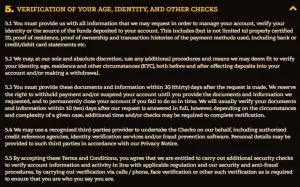
Age verification must take place before a customer can deposit or play. The Gambling Commission requires licensed operators to establish that customers are at least 18. This makes verification a condition of access to real-money gambling, not an optional account check that can be postponed until a withdrawal is requested. A site that permits deposits or play before confirming age is not following this requirement.
The funds rule concerns how the operator accounts for customer money. A UKGC licensee must keep player funds apart from its operational funds. The purpose is to protect customer money if the casino becomes insolvent: balances are not meant to be treated as ordinary business capital available to meet the operator’s expenses. The separation is therefore a substantive financial control, not a label for a payment method or a feature of the casino interface.
That distinction is useful when assessing claims about account safety. A displayed balance records what the operator says is held for a customer; the regulatory requirement concerns how player funds are handled in relation to the business’s own money. Separate treatment reduces the risk that those funds are simply absorbed into operational spending if the company fails. It does not turn a balance into a promise that every withdrawal will be immediate, nor does it make the account equivalent to a bank deposit.
Safe Online Casinos in the UK: Licensing and Protection
The protections attach to the operator’s UKGC status, rather than to the appearance of a site or the country named in its branding. A Malta online casino may describe its ownership, location or regulatory background in prominent terms, but those details do not answer whether the operator has the UKGC licence needed to serve Great Britain under the applicable rules. The relevant distinction is between an operator subject to UKGC requirements and one that is not.
For a real-money account, the practical sequence is straightforward: age must be confirmed before deposits or play, and player funds must be separated from operating funds by a UKGC licensee. Those controls address different risks. Age verification prevents under-18s from entering real-money play; segregation addresses the treatment of customer balances if the business becomes insolvent. Neither is a bonus term, and neither should be inferred merely from a site calling itself an MGA casino or presenting itself as Malta-based.
UK Players, Great Britain and Northern Ireland
“UK player” is a geographical shorthand, not a complete description of the rules that apply. Great Britain comprises England, Scotland and Wales; Northern Ireland is also part of the United Kingdom, but it sits outside the UK Gambling Commission’s jurisdiction under the Gambling Act 2005. As a result, a Malta-based casino’s policy on accepting customers cannot be assessed using one UK-wide regulatory category.
For customers in England, Scotland and Wales, the position is clear: an operator offering real-money online gambling must hold a UKGC licence. That requirement applies to the service offered into Great Britain, rather than being determined by where the operator has its offices. A Malta address or an MGA licence does not change which regulator’s rules apply to remote gambling offered to consumers in Great Britain.
Northern Ireland follows a different regulatory framework. The UKGC does not supervise remote gambling there on the same basis that it does in England, Scotland and Wales. This distinction does not make Northern Ireland an extension of the MGA’s jurisdiction, nor does it mean that a site’s acceptance of a customer settles the question of whether its service is appropriately authorised. The applicable rules must be considered for the customer’s actual jurisdiction.
Casino Without a UK Licence: Rules and Risks
That makes claims about Malta casinos accepting UK players imprecise. A site might use “UK” as a broad market label, while the regulatory position depends on whether it is offering real-money gambling to someone in Great Britain or dealing with a customer in Northern Ireland. The label alone says nothing reliable about the operator’s authority to serve either group. A single customer’s nationality is not a substitute for identifying where the gambling service is being provided.
The same distinction matters when a site advertises free play or other non-cash access. A promotional description does not erase the geographical boundaries of the regulatory framework. Where the activity is real-money gambling offered to customers in England, Scotland or Wales, the UKGC licensing requirement applies. The phrase “free play” by itself does not establish what the offer involves or change the customer’s jurisdiction.
Searches for the best MGA casinos for UK players therefore combine two questions that should be kept separate: where the customer is located, and which regulator’s rules apply to the service. For Great Britain, the relevant operating permission is a UKGC licence, not simply an overseas authorisation. For Northern Ireland, the Great Britain rule cannot be treated as a full statement of the local regime. “UK players” may be convenient wording on a website, but it is too broad to determine the regulatory position.
Merkur Casino Online UK: Games, Accounts and Terms
A site that accepts customers from different parts of the UK may therefore need to distinguish them in its own access and account terms. The location distinction is not a technicality: it determines which regulatory framework is relevant. For a Malta online casino, a general statement that it welcomes UK customers cannot replace a jurisdiction-specific explanation of whom it serves and under what authority.
Bonuses: Turn the Wagering Terms into a Cash Requirement
A bonus headline is not the amount available to withdraw. The relevant figure is the qualifying stake required by the promotion’s wagering condition, followed by any game-contribution rules. A Malta casino bonus, including a no-deposit offer, should therefore be read as a set of cash conditions rather than as free balance.
One specialist review gives a worked illustration: a £20 bonus carrying a 35x wagering requirement calls for £700 in qualifying bets before the bonus converts to withdrawable cash. That is a calculation for that stated offer, not a standard term for Malta online casino bonuses. The multiple and the bonus amount must both come from the promotion’s actual terms; changing either changes the required turnover.
Bonus Wagering Calculation
Step 1: Identify the terms
Take a £20 bonus with a 35x wagering requirement.
Step 2: Calculate total turnover
Multiply the bonus amount by the requirement: £20 × 35 = £700 in qualifying bets.
Step 3: Apply contribution rates
Adjust for game type; for example, a £10 stake on a game with 10% contribution adds only £1 toward the £700 goal.
Contribution rates alter the calculation because not every pound staked necessarily counts as a pound of qualifying play. Slots commonly contribute the full value of a bet, while table games may count only 10% or 20%; some table games make no contribution at all. If a game contributes 10%, for instance, a £10 stake adds £1 to qualifying turnover, not £10. The play required can therefore rise sharply when a low-contribution game is used.
The practical comparison is between the bonus amount, the wagering multiple, the eligible games and their contribution rates. A headline with a larger bonus can demand more turnover than a smaller offer, while game restrictions can make the stated multiple an incomplete guide to the amount of betting needed. Terms may also distinguish bonus funds from cash deposited, so the balance that must be wagered should be identified before calculating.
The same arithmetic applies to an MGA casino bonus or an online casino bonus associated with Malta: the label does not change the formula. A Malta casino no-deposit bonus may remove an initial deposit condition, but it does not, by itself, make bonus funds immediately withdrawable. Bitcoin wording does not change wagering maths either; without stated promotion terms, it says nothing about the qualifying stake or final cash value.
The useful number is not the bonus displayed on the page. It is the qualifying turnover required under the specific terms, adjusted for the games that count and their contribution rates. If those conditions are unclear, the headline cannot provide a reliable cash value.
The Malta Gaming Authority and the Limits of Its Role for UK Customers
The Malta Gaming Authority (MGA) regulates gambling operators licensed in Malta. Its oversight may matter when an operator holds an MGA licence, but it does not give that operator authority to offer remote gambling to customers in Great Britain. That authority rests with the UK Gambling Commission (UKGC): a business serving consumers in Great Britain remotely needs a UKGC licence, even if its headquarters or regulator is in Malta.
Non-GamStop Curacao Casino Sites: UK Rules Explained
The distinction is about jurisdiction, not the quality of a Malta-based casino or the appearance of its website. An MGA licence identifies oversight by Malta’s regulator; it does not replace the operating licence required for the British market. An MGA-regulated online casino may therefore hold a valid licence in Malta while still lacking permission to serve customers in Great Britain. The two claims answer different questions.
The MGA also sets a specific requirement for customer money. Its licensees must keep player funds in segregated accounts with a financial institution approved for that purpose. This separates those funds from the operator’s ordinary business money. It is a meaningful condition of MGA oversight, but it should not be read as proof that a player’s balance is guaranteed in every circumstance, or as evidence that the operator is authorised by the UKGC.
Those distinctions matter when assessing claims about Malta Gaming Authority casinos or an MGA online casino licence. A listing of MGA-licensed casinos can establish, at most, that the listed operators are associated with the Maltese regulator; it does not establish that they may serve the British market. Nor does a payment option, free-spins promotion or other offer change which regulator has authority over remote gambling offered in Great Britain.
The relevant licence depends on the market being served. Malta’s regulator oversees its licensees, including the stated player-funds arrangement. The UKGC governs remote gambling offered to consumers in Great Britain. Treating one regulator’s oversight as a substitute for the other collapses two separate regulatory roles into one—and leaves the most important question unanswered: whether the operator holds the UKGC licence required to serve that market.
Non-UK Licence Casinos: Rules and Risks
New Malta Casinos: The Licence Check Still Comes First
A recent launch does not change the rule for serving customers in Great Britain. Any operator providing remote gambling facilities to consumers in England, Scotland or Wales must hold a UK Gambling Commission operating licence, wherever the business is based. A Malta address, a new brand or an MGA licence does not create an exception to that requirement.
That distinction matters when a casino has only just appeared. A launch announcement describes when a service became available; it does not establish which regulator authorises its activity in Great Britain. Nor does a polished site, a growing list of games or an advertised payment option prove that the operator holds the required UKGC licence. Those are features of a product, not evidence of permission to offer it to British customers.
The same applies to claims about a new MGA casino. The MGA may regulate an operator under Malta’s system, but the relevant question for Great Britain is whether the operator also holds the UKGC licence required to serve that market. “New” and “licensed” are not interchangeable descriptions: the first concerns timing, while the second must relate to the regulator with authority over the activity in question.
There is a practical consequence beyond the label. UKGC licensees must have an approved Alternative Dispute Resolution provider for player complaints. That gives the complaint route a defined regulatory condition; a recent opening or an overseas licence alone does not establish access to the same arrangement. The operator’s claims about its launch should therefore be kept separate from claims about the protections attached to a UKGC licence.
For a newly launched Malta-based casino, the assessment is not improved by being first to market, nor weakened merely because the brand is unfamiliar. The decisive point is whether the operator has the required UKGC licence for remote gambling offered to Great Britain. Without that authorisation, newness supplies no substitute and no additional protection.
Non-Gamban Casinos in the UK: What to Know
Malta-Based Casinos and Payment Claims
A Malta address can describe where an operator says it is based; it does not determine whether that operator may offer remote gambling to customers in Great Britain. For that market, the relevant requirement follows the customer-facing service, not the company’s location: an operator needs a UK Gambling Commission licence to provide remote gambling facilities to people in Great Britain.
That distinction matters when payment information is used as a proxy for regulatory status. A page mentioning Mastercard or Paysafecard, or presenting a payment option as available at a Malta-based casino, says nothing by itself about whether the operator holds the required UKGC licence. Payment branding is a commercial detail, not evidence of permission to serve the British market.
The same applies to claims about an MGA casino accepting a particular card or voucher. A payment method may be listed, unavailable, or subject to the operator’s own terms; none of those possibilities establishes the regulatory position. Nor does a Malta-based online casino become authorised in Great Britain merely because its payment page appears local or familiar.
The practical distinction is between the operator’s claimed base and its authority to provide the service in the relevant market. “Based in Malta” answers a location question. It does not answer whether the operator may offer gambling to consumers in Great Britain. The UKGC requirement remains in place regardless of where the business operates from.
Payment claims should therefore be read narrowly: they describe a way an account may be funded, not the legal basis for offering gambling. Where the operator’s Malta connection is prominent, that detail should not obscure the separate question of whether it is licensed for Great Britain. A familiar card logo cannot perform the work of an operating licence.
Can I still play at non-UKGC casinos if I’m based in the UK?
An MGA or other offshore licence does not authorise a casino to offer remote gambling to consumers in Great Britain. Operators serving customers there must hold a UKGC licence.
Are offshore casinos legal for UK players?
Operators offering gambling to consumers in Great Britain must have a UKGC licence, regardless of where they are based. An offshore licence alone does not meet that requirement.
Are no-deposit spin offers legal in Great Britain?
A no-deposit offer must come from an operator authorised to serve Great Britain, so the operator needs a UKGC licence. To claim an offer, players must be physically located in Great Britain.
What tools do UK operators have to provide?
UKGC-licensed operators must offer deposit and loss limits, session limits, time-outs, self-exclusion and reality checks. They must also participate in GamStop.
What happens if an offshore casino refuses to pay my winnings?
The UKGC does not handle complaints about operators licensed outside the UK. Its complaint route—first the operator’s approved ADR provider, then the Gambling Commission if unresolved—applies to UKGC-licensed operators.
How can you check whether an online casino is legal?
For consumers in Great Britain, check that the operator holds a UKGC licence. A Malta or other offshore licence does not replace it.
Material created by the team Lizaro