

A Curaçao licence does not make an operator UK-regulated; the key question is whether it is authorised to serve the UK market.
What “Curaçao Casino” Means in the UK Market
In the UK market, a “Curaçao casino” generally means an online gambling site associated with a licence issued in Curaçao. The label describes the jurisdiction connected with the operator’s licence; it does not describe a separate kind of casino game or establish that the site is regulated by the UK Gambling Commission.
The relevant distinction is between a site’s place in the UK regulatory system and the jurisdiction that may oversee it elsewhere. A non-UK-regulated casino is an online gambling site operating without oversight from the UK Gambling Commission. Such sites may be licensed by jurisdictions including Curaçao, Malta, Gibraltar or Anjouan. Curaçao is therefore one possible licensing jurisdiction among several, not a synonym for every casino operating outside UK regulation.
That distinction matters because familiar words can carry different weight. “Licensed” is incomplete unless the licensing authority is identified. A Curaçao licence, where an operator holds one, refers to oversight associated with Curaçao. It does not turn the site into a UK Gambling Commission-regulated operator. The word “casino” describes the gambling service; “Curaçao” identifies the jurisdiction linked to its licence claim. Neither word, alone or together, means UK authorisation.
For UK readers considering casinos associated with a Curaçao licence, check the operator’s licensing and availability for your location before signing up. The details below are limited to the payout-speed information provided.
1. Amunbet
Payout speed: 1-3 business days Amunbet has a listed payout speed of 1–3 business days.
2. Jetsetspins
Payout speed: 1-3 business days Jetsetspins has a listed payout speed of 1–3 business days.
3. Dieselwin
Payout speed: 1-3 business days Dieselwin has a listed payout speed of 1–3 business days.
4. WinBeast
Payout speed: 1-3 business days WinBeast has a listed payout speed of 1–3 business days.
5. x3bet
Payout speed: 1-3 business days x3bet has a listed payout speed of 1–3 business days.
6. Britsino
Payout speed: 1-3 business days Britsino has a listed payout speed of 1–3 business days.
7. EvoSpin
Payout speed: 1-3 business days EvoSpin has a listed payout speed of 1–3 business days.
8. Chanze
Payout speed: 1-3 business days Chanze has a listed payout speed of 1–3 business days.
9. SpinFormula
Payout speed: 1-3 business days SpinFormula has a listed payout speed of 1–3 business days.
10. BeOnBet
Payout speed: 1-3 business days BeOnBet has a listed payout speed of 1–3 business days.
For readers comparing Curacao online casinos, this is the useful starting point: the phrase is a market label, not a complete regulatory description. A casino may present itself as Curaçao-licensed and still sit outside the UK Gambling Commission’s system. The label does not tell the whole story about the company behind the site, the exact scope of any licence, or whether the operator is authorised for a particular market. Those are separate questions, not details that can be settled by the jurisdiction name alone.
The same applies to searches for a Curacao online casino or Curacao casinos online. They may bring together sites that share a stated connection to Curaçao, but that shared label does not make them one operator or establish identical oversight. Nor does it make a group of sites equivalent to UK-regulated casinos. In practical terms, the jurisdiction named on a site is one part of its identity; the UK regulatory status is another.
The phrase “offshore casino” is also commonly used in this context, but it can obscure the point if treated as a licence category. Here, it refers to a gambling site operating outside UK Gambling Commission oversight. Its location or licensing jurisdiction may be abroad, but the decisive feature of the term is the absence of UKGC oversight. A non-UK-regulated casino might be linked to Curaçao, Malta, Gibraltar or Anjouan; the label does not, by itself, specify which.
Casino Without a UK Licence: Rules and Risks
This is why “Curaçao” should not be read as a quality rating. It does not indicate that a casino is better, safer or more suitable for UK customers. Those are evaluations that would require information beyond the jurisdiction name. Likewise, a page describing a site as a Curaçao casino does not establish that the licence claim has been independently checked. The label explains how the site is presented in the market, not what can be concluded about its full regulatory position.
For anyone encountering the term online casino Curaçao, the distinction can be reduced to two separate questions: which jurisdiction is associated with the operator’s licence, and whether the operator is under UK Gambling Commission oversight. A Curaçao connection addresses the first question only. It does not answer the second. Treating the two as interchangeable would make a foreign licensing description do work it cannot do.
This framing also helps with phrases such as “best Curaçao online casinos” or “best Curaçao online casino UK”. “Best” is a ranking claim, not a regulatory fact, while “UK” may refer simply to the intended audience or the wording of a page. Neither term changes what Curaçao means in the label. A list or promotional description using those words cannot establish UKGC oversight merely by including the market name.
The distinction is not technical bookkeeping. It sets the limits of what can reasonably be inferred from a short description. “Curaçao casino” signals a claimed connection to a foreign licensing jurisdiction; “non-UK-regulated casino” states that the site operates outside UK Gambling Commission oversight. The terms overlap in some cases, but they are not interchangeable: one names a jurisdiction, while the other describes the site’s position in the UK regulatory framework.
Do
- Identify the operator’s exact legal name
- Verify the licence against the authority’s published records
- Compare the company name in terms with the homepage
Don’t
- Treat a brand name as the legal entity
- Assume a licence badge is proof of verification
- Substitute a reviewer’s rating for a licence check
Curaçao Casino Licensing: What Can Be Verified
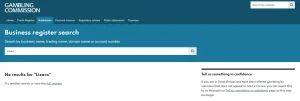
A casino’s statement that it holds a Curaçao gaming licence is a claim to verify, not proof of what the licence covers. The useful starting point is the operator’s exact legal name and the licensing authority it identifies. A brand name on a homepage may differ from the company named in its terms, so those details need to be compared rather than treated as interchangeable.
Curaçao eGaming is an authority associated with Curaçao licensing. A reference to it, a badge, or a licence number should be checked against information published by the authority, where that information is available. The name on the record should correspond to the company operating the casino. If a site gives no identifiable operator, or the authority’s information does not support the claim, the licence cannot be treated as verified on that basis.
The same distinction applies to ratings. A Curaçao casino rating may describe a reviewer’s assessment of the site, but it does not establish that the licensing authority recognises the operator or that a licence is current. Ratings and licence checks answer different questions; one cannot substitute for the other.
A verified foreign licence would still establish only what the relevant jurisdiction recognises. It does not, by itself, show that the operator is authorised to serve customers in Great Britain. That is a separate question from whether the operator can substantiate its Curaçao licence claim. A casino can therefore present a licence claim that is verifiable in its own jurisdiction without that claim deciding its UK status.
Merkur Casino Online UK: Games, Accounts and Terms
Anjouan illustrates why standards should not be transferred from one jurisdiction to another. Under Anjouan’s framework, licensed casinos are not required to integrate GAMSTOP or offer an independent dispute-resolution route comparable to UK Gambling Commission-approved services. That framework also does not mandate random-number-generator testing, audits or segregated player funds. Those are facts about Anjouan, not evidence of Curaçao’s requirements. Treating them as a description of every non-UK licence would be inaccurate.
For a Curaçao claim, the defensible check is narrow: identify the operator, identify the authority named, and see whether the authority’s own information supports the connection between them. If the details cannot be matched, uncertainty remains; a prominent badge or a favourable review does not close that gap. Even a successful match should not be read as a guarantee about every aspect of the casino’s operation or as UK authorisation. A licence is a jurisdictional credential, not a general certificate for every market.
The Legal Position for UK Players
The legal distinction is between the business supplying gambling and the person placing a bet. The Gambling Act 2005 is directed at operators providing gambling services into the UK market. Its focus is not on prosecuting individual customers for using a gambling site licensed elsewhere.
UK law does not expressly bar British citizens from using gambling services licensed in another country, and doing so does not make the player a criminal under UK law.
For a player considering a Curaçao casino, that distinction matters. A foreign licence does not turn the operator into a UK-regulated business, but the absence of a UK licence does not, by itself, make the player’s act a criminal offence. UK law does not expressly bar British citizens from using gambling services licensed in another country. Similarly, a person who gambles on a site without a UK licence does not commit a criminal offence under UK law on that account.
These points describe the player’s legal position; they do not grant an overseas operator permission to supply services in Britain. The law places the relevant licensing obligation on businesses targeting the market. Whether a particular site is authorised to serve customers in Great Britain is a separate question about the operator, not a test of whether a customer has committed an offence. That distinction can be easy to lose when a site advertises a Curaçao licence as though it settled every legal issue.
“Not a criminal offence for the player” is also narrower than “the same as using a UK-regulated casino”. The first concerns criminal liability under UK law. It does not mean that a foreign licence has UK status, that UK regulatory protections apply, or that the operator is answerable to UK authorities in the same way as a locally licensed business. Those consequences attach to the operator’s regulatory position, not to the player’s lack of criminal liability.
International Casinos for UK Players: A 2026 Guide
The scope of the main statute should also be stated precisely. The Gambling Act 2005 governs gambling in England, Wales and Scotland; it does not govern Northern Ireland. A broad reference to “UK law” can therefore conceal a territorial distinction. The general point that the Act is aimed at operators rather than individual players should not be turned into a claim that every gambling arrangement is treated identically across all four nations.
For residents weighing up a Curacao casino license, the legal answer is consequently limited but clear: UK law does not explicitly prohibit British citizens from using gambling services licensed abroad, and gambling on an unlicensed site does not make the player a criminal under UK law. That is not the same as saying that every overseas service is legally authorised to operate in the British market. Player liability and operator authorisation are separate legal questions, with different subjects and different consequences.
The practical distinction is important because a site’s licence describes its relationship with the jurisdiction that issued it; it does not decide the player’s legal status under UK law. Nor does the absence of criminal liability amount to an endorsement of the service. Anyone considering offshore gambling remains responsible for checking the laws that apply to them and understanding the implications of using a service outside the UK regulatory system.
Curaçao Casino Sites and the Limits of a Licence List
A directory of Curaçao casino sites can be a starting point for identifying operators associated with that licensing jurisdiction. It is not, by itself, proof that a particular casino holds a current licence, that the licence belongs to the company running the site, or that the operator is authorised to serve customers in Great Britain. Those are separate questions, and a list that answers only the first is not a complete assessment.
A directory listing of Curaçao licensed casinos is not proof of a current licence or UK authorisation; it should be treated as a set of claims to examine.
The distinction matters because a website name and a licensing jurisdiction are not the same thing as a verified operator. A directory may group sites under a familiar label such as “Curaçao licensed casinos”, but the label alone does not show which legal entity operates each site or whether the information has been checked against an official record. Similar branding can also make separate sites look like parts of one operation, while a company name in small-print terms may differ from the name displayed on the homepage.
A useful Curacao casino list should therefore be read as a set of claims to examine, not as a certificate. The listing needs to identify the casino clearly and connect it to the relevant operating company and licensing information. If those details are absent, vague or inconsistent across the site’s terms and payment pages, the directory has not resolved the basic question of who is responsible for the service. A badge or logo, without a clear link to the named operator, adds little.
Nor does a list establish that the site is suitable for the British market. Licensing jurisdictions commonly associated with non-UK-regulated casinos include Malta, Curaçao, Gibraltar and Anjouan. That describes a range of overseas licensing locations; it does not make their permissions interchangeable, and naming one does not demonstrate UK authorisation. A directory may use “licensed” as a broad category while leaving the market-specific status unstated.
USA Casinos for UK Players: UK Licensing Explained
Casino reviews have a similar limit. They can describe a reviewer’s assessment of a site, but a positive rating does not independently establish the operator’s identity, the scope of its licence or its authority in Great Britain. The review and the licensing claim are different pieces of information. They should not be treated as substitutes for one another.
The same applies to searches for a particular feature. A mention of Paysafecard, another payment method or a particular slot says something about the advertised product or cashier options, not about the status of the casino’s licence. The presence of a Curaçao-themed label beside a slot title is not evidence that the operator is licensed at all. These details may help distinguish one site from another, but they cannot carry the weight of regulatory verification.
The practical value of a directory depends on its boundaries. A dated page may reflect an earlier version of a site; a list described as comprehensive may still omit operators or retain entries whose details have changed. Even a carefully organised list can only support the conclusions its information justifies. It can help locate names for further checking, but it cannot turn a jurisdiction label into proof of a live, matching licence or UK approval.
“Is a Curaçao casino safe?” has no answer in the licence label alone. A list can narrow the field of sites being considered, but it cannot settle the wider questions of operator identity, market authorisation or the quality of the protections available. Treating the directory as a verdict would collapse those separate checks into one convenient—and unreliable—tick.
Market Authorisation
An operator serving customers in Great Britain must hold a UK Gambling Commission licence, regardless of any overseas licences held.
Sites Accepting UK Players: Authorisation Is the Deciding Condition
A Curaçao connection does not determine whether a casino is authorised to serve customers in Great Britain. The decisive condition is the operator’s permission for this market: operators serving customers in Great Britain must hold a UK Gambling Commission licence, wherever they are based. A licence from another jurisdiction does not replace that requirement.
This distinction matters when a site describes itself as a Curaçao casino for UK players or says it accepts British customers. Those phrases describe a claimed audience or a commercial arrangement; they do not establish UK authorisation. The same applies to a site that appears accessible from a British address. Access to a website is not proof that its operator is permitted to offer gambling services in Great Britain.
The relevant question is therefore not simply whether a Curaçao-licensed operator takes deposits from people in Britain. It is whether the operator holds the required UKGC licence to serve the market. A Curaçao licence and a UKGC licence are separate authorisations, and the first cannot be treated as evidence of the second. If a site relies only on its Curaçao status when presenting its UK availability, that does not satisfy the market’s licensing condition.
Payment options make no difference to this test. A Curaçao crypto casino does not become authorised for Great Britain by accepting cryptocurrency, just as a casino offering other payment methods does not gain permission through those methods. The operator’s location, its payment channels and its choice of games do not displace the requirement for a UKGC licence when it serves customers in Great Britain.
Trustworthy Online Casinos in the UK: What to Check
The wording “accepting UK players” can consequently refer to two different things: a site may allow a customer to register or attempt to use its service, while the operator may still lack the authorisation required to serve Great Britain. Those are not equivalent claims. A site’s own description, or the fact that its registration process proceeds, does not change the licensing condition.
For anyone comparing Curaçao online casinos that appear available to British customers, the useful dividing line is not how prominently the site advertises UK access. It is whether the operator is licensed by the UK Gambling Commission for the relevant activity. Without that authorisation, the site does not meet the condition for legally serving customers in Great Britain, regardless of where its company is established or which overseas licence it cites.
This is a market-level test, not a judgement about a particular payment, bonus or individual customer. It also avoids a common category error: treating “can be reached from Britain” as interchangeable with “is authorised to serve Britain”. The first describes technical availability. The second concerns the operator’s authority, and that is the condition that decides whether a site may properly serve the Great Britain market.
GamStop Is Not a Block on Offshore Casinos
GamStop is the UK Gambling Commission’s self-exclusion scheme. A casino outside that scheme is not connected to it, so a GamStop registration does not block access to a Curaçao-branded site simply because the site operates under an overseas licence. “Not on GamStop” describes the operator’s relationship with the scheme; it is not a separate licence category or a form of approval.
Protection Gap
A GamStop registration does not block access to casinos operating under overseas licences, as these sites are outside the UK self-exclusion scheme.
That distinction matters because the practical effect of self-exclusion depends on where the gambling account is held. Casinos not on GamStop are outside the UK scheme. A person who has excluded themselves through GamStop therefore cannot treat that registration as a barrier covering every online casino available from Britain. The exclusion applies within the scheme, not universally across the internet.
A Curaçao licence claim does not change that position. A licensing jurisdiction and a self-exclusion system perform different functions: the former concerns an operator’s regulatory status, while GamStop is a UK self-exclusion service. A casino described as licensed in Curaçao is not thereby signed up to GamStop, and the words “Curaçao casino not on GamStop” do not establish anything about the strength of its player protections. The label only indicates that the site is outside the UK scheme.
The protection gap
For someone relying on self-exclusion to stop gambling, the gap is direct. If a site is not part of GamStop, the scheme cannot restrict that account. Searching for new Curaçao casinos that are not on GamStop, or choosing a site described as exempt from GamStop, does not create an extension of the exclusion. It means considering a service beyond its reach.
This is not a technicality that can be solved by checking whether the casino displays a responsible-gambling page. Non-UK-regulated casinos may apply less stringent responsible-gambling and data-protection rules than operators licensed by the UK Gambling Commission. The protections available can therefore differ, and the presence of a policy or account setting does not make it equivalent to the UK scheme.
VPN-Friendly Casinos in the UK: Rules and Risks
At an offshore casino, players also lose access to the mandatory responsible-gambling tools associated with UK-regulated gambling. Tools such as deposit limits and self-exclusion should not be assumed to be available in the same form, or to operate across other sites. Where a casino offers its own controls, those controls relate to that operator; they do not substitute for a system spanning participating operators.
That leaves a material difference between intending to stop and having a restriction that covers the account being used. A self-exclusion arrangement is useful only within its scope. If gambling continues on a site outside that scope, the arrangement has not failed technically; it was never connected to that site.
A separate account is not a continuation of GamStop
Descriptions such as “Curaçao online casinos without GamStop” can make the relationship sound like a setting that can be switched off or an exception granted by the regulator. It is neither. The site is simply not part of the UK self-exclusion scheme. Nor does an overseas licensing claim mean that GamStop has authorised an exemption.
The same separation applies to other details promoted on a casino page. A welcome bonus, a no-deposit offer or a list of payment methods says nothing about whether the operator participates in GamStop. Those commercial terms do not restore the UK scheme’s reach or provide its mandatory tools. They should be assessed separately from the question of self-exclusion.
Opening an account at a casino outside GamStop can undermine the practical purpose of self-exclusion without changing the registration’s formal status.
For someone already using GamStop, opening an account elsewhere can undermine the practical purpose of the exclusion without changing its status. The registration remains in force within its scope, but it does not prevent play on a site outside it. That is why “not on GamStop” is a meaningful limitation, not a feature that increases protection.
The financial and personal consequences are also different when safeguards are weaker. If an operator does not provide comparable tools, the process for limiting or stopping activity may depend on that operator’s own arrangements. Data-protection rules may also be less stringent than those applied to UKGC-licensed operators. Neither point proves how a particular Curaçao-branded site will handle an account; it does mean that UK standards should not be presumed.
For a person seeking to maintain a gambling exclusion, a Curaçao casino outside GamStop is not an alternative route within the scheme. It is outside the scheme’s coverage. The difference between those two descriptions is the difference between a restriction that applies to the account and one that does not.
Bonuses and Slots: Calculate the Conditions, Not the Headline
A welcome bonus is not its advertised amount but the cash, if any, left after the conditions are met. For Curaçao casino bonuses, the first figure to identify is the wagering requirement. A specialist review reports offshore offers with requirements of 35x or more, but that is not a standard applying to every operator or promotion. The live terms attached to the offer determine the calculation.
The multiplier alone is not enough. A specialist review describes a 40x condition that can apply to the bonus and deposit combined, to the bonus alone, or to the bonus and free spins together. Those bases produce different totals, even when the displayed multiplier is identical. The terms should specify which balance must be wagered, which games contribute, and whether a maximum bet applies while the bonus is active. If the base is unclear, the headline cannot be converted into a reliable cash value.
Free spins need a separate calculation. A specialist review reports requirements of 30–50 times the winnings from spins, alongside withdrawal caps of £5–£50. These are reported terms, not fixed Curaçao-wide conditions; the offer itself has to be checked. A cap can make the maximum withdrawable amount much smaller than the winnings shown in the account, while wagering requirements can require further play before any withdrawal is available. The relevant outcome is the amount that remains eligible for withdrawal after both rules have been applied.
Expiry is another term to verify before accepting a package. Free spins or their resulting winnings may be subject to a stated deadline, and missing it can change the value of the promotion. The available terms should make clear when the spins must be used and how long winnings remain subject to wagering. No deadline should be assumed from the advertised package alone.
Bonus Calculation
Identify the Wagering Requirement
Check the multiplier (e.g., 40x) and determine if it applies to the bonus alone or the bonus and deposit combined.
Calculate Free Spin Value
Multiply the winnings from spins by the requirement (e.g., 30–50x) and apply any withdrawal caps (e.g., £5–£50).
Verify Expiry and Contribution
Check the deadline for using spins and identify which slots contribute fully toward the wagering requirements.
Slot choice matters only where the terms assign different contribution rates or exclude games. Book of Dead and Starburst can illustrate the kind of titles a promotion may name, but a familiar slot title does not establish that its bets count fully toward wagering. The bonus rules, not the game’s branding, determine whether play advances the requirement.
For Curaçao casino slots, the useful comparison is therefore not the largest advertised bonus. It is the precise wagering base, the games that qualify, any cap on withdrawals, and the expiry conditions. A promotion with a smaller headline can leave more withdrawable cash if its terms are less restrictive; without those terms, the headline is only packaging.
Crypto Payments and the UK Credit-Card Ban
Payment methods describe how funds move; they do not establish what licence a casino holds or whether it is authorised to serve customers in Great Britain. A Curaçao licence claim and a crypto option are separate details, not two pieces of evidence that validate each other.
Non-UK-regulated casinos may accept credit cards, e-wallets, bank transfers and cryptocurrencies. Some use alternative payment processors, so the route shown at checkout may not be the casino’s own banking service. Availability can depend on the operator and the payment provider; a method displayed on a general site page may not appear for every account or transaction.
The relevant distinction for crypto is the UK ban on gambling funded by credit cards. A cryptocurrency deposit can bypass that particular restriction because it is not processed as a credit-card-funded gambling payment. That describes the payment path, not a safeguard. It does not convert an unregulated site into a UK-licensed one, nor does it establish that the transaction is free of cost or risk.
The same separation matters when checking a so-called Curaçao crypto casino. A crypto symbol in the cashier tells little about the operator’s licence, the company receiving funds or the conditions attached to a transaction. Those details need to be assessed independently. A licence label is not a payment guarantee, and a successful deposit is not confirmation that the casino will return funds by the same route.
Depositing and withdrawing are also different operations. A casino may accept a particular cryptocurrency or card for deposits without offering that method for withdrawals. The available withdrawal route can be subject to the operator’s terms and payment-provider arrangements. No deposit method should therefore be treated as proof of a matching cash-out option.
For a meaningful cost comparison, the payment terms need to be read alongside the cashier’s available methods and the operator’s withdrawal rules. If those rules do not state that the same route can be used in both directions, the deposit option alone cannot settle the question. The distinction is basic, but expensive to overlook: the money can enter through one channel and be subject to a different process on the way out.
Skrill, Neteller and Withdrawals: Timing Is Not Guaranteed
Skrill, Neteller and Trustly may appear in payment information for a Curaçao casino, but a deposit option is not proof that the same method is available for cashing out. The payment terms need to distinguish deposits from withdrawals; otherwise, the route back to a bank account or e-wallet remains unclear. Availability can also depend on the operator’s current arrangements, so a payment logo alone does not settle the question.
Withdrawal Timelines
Processing times for non-UK-regulated casinos vary significantly, with reported ranges from 24 hours to 5 business days, and in some cases, up to three or four weeks.
Withdrawal timing is less predictable than a payment-method label suggests. One stated range for withdrawals at non-GamStop casinos is 24 hours to 5 business days, depending on the method. Other reported timelines for non-UK-regulated casinos extend to three or four weeks. Those estimates conflict, and neither should be treated as a firm payout commitment. Outside the UK regulatory system, there is no regulatory clock to enforce a stated processing period.
The difference matters to cash flow. A short estimate may describe a straightforward transaction, while a longer delay can leave funds unavailable for weeks. The operator’s terms should be checked for processing stages, verification requirements and any conditions attached to the chosen withdrawal route. A displayed processing estimate is not the same as a deadline backed by UK oversight.
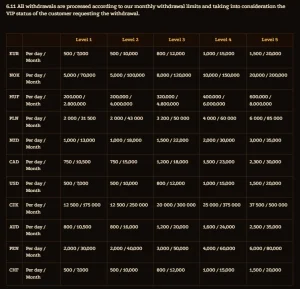
Withdrawal limits can also change the amount received at any one time. A specialist review has reported daily, weekly or monthly caps at some non-UK-regulated casinos, which can divide a large win into instalments. This is not a universal rule: the relevant operator’s current terms determine whether a cap applies, how it is calculated and when a further payment can be requested. A balance that appears withdrawable may therefore take longer to reach the account than a single transfer would.
For Skrill, Neteller or Trustly, the practical comparison is not simply which names appear on a cashier page. It is whether the method accepts withdrawals, what conditions govern approval, and whether limits or processing delays alter the final timetable. Payment support at deposit does not guarantee payment support at withdrawal.
Safety, Complaints and the Cost of Weak Oversight
A licence label does not settle whether a casino is safe or legitimate for a particular player. The operator’s identity, the scope of its authorisation and the protections attached to that authorisation all matter. A framework in one jurisdiction cannot be treated as a description of Curaçao’s rules; the same caution applies in reverse.
Non-UK Licence Casinos: Rules and Risks
Anjouan illustrates why the distinction matters. Anjouan-licensed casinos do not guarantee that player funds are kept separate from operating money. If an operator fails, customers may rank as unsecured creditors, with no guaranteed recovery of balances. That is a specific risk associated with that framework, not a finding about every Curaçao-licensed site.
Complaint routes can also differ materially. The Anjouan authority does not investigate, mediate or decide individual player complaints. A player disputing a balance or a withdrawal there therefore cannot assume that the licensing authority will resolve the case. A licence, by itself, is not a substitute for an independent dispute process.
Verification can create a separate cost. One specialist review reports that some offshore operators may require notarised documents or a video call before releasing a withdrawal. Such steps are not established as standard across Curaçao casinos, but where an operator imposes them, the time and expense become part of the practical value of the balance. Identity checks should be read alongside the withdrawal terms, not discovered after a win.
For a British customer, offshore play also means losing access to UK regulatory routes and protections that apply at UK-licensed operators. If terms change or a dispute remains unresolved, there is no UK Gambling Commission complaint process for that non-UK-regulated casino. The distinction is financial as well as procedural: a displayed balance is not the same thing as money that can be recovered through UK channels.
Before using an overseas gambling service, the operator’s authorisation and complaint arrangements need to be understood, and local law checked. The legal position can depend on where the service is offered; a foreign licence does not itself establish permission to serve Great Britain. Offshore gambling carries consequences that a licence badge alone cannot price.
Are sites that are not on GamStop legal for players in the UK to access?
Yes. UK law does not explicitly prohibit British players from using gambling services licensed abroad, and players do not commit a criminal offence by gambling on an unlicensed site. Operators serving customers in Great Britain still require a UK Gambling Commission licence.
Are non-UK-regulated casinos legal for UK players to use?
Yes, using one is not a criminal offence for a player under UK law. The Gambling Act 2005 targets operators supplying gambling services into the UK market, and operators serving customers in Great Britain need a UK Gambling Commission licence.
What is the biggest risk of playing at a non-UK-regulated casino?
You have fewer protections if something goes wrong: Anjouan-licensed casinos, for example, do not provide an independent dispute-resolution route comparable to UKGC-approved services, and player funds are not guaranteed to be segregated. You also lose access to the UK’s Financial Ombudsman Service and mandatory responsible-gambling tools.
Are Anjouan casinos connected to the GamStop self-exclusion scheme?
No. Anjouan-licensed casinos are not required to integrate GAMSTOP, so their players cannot rely on that scheme to block access.
Are Anjouan-licensed casinos safe and fair?
An Anjouan licence does not guarantee that player funds are segregated or that games undergo RNG testing or audits. The framework also does not provide an independent dispute-resolution route comparable to UKGC-approved services.
Material created by the team Lizaro