

An Anjouan licence does not replace UK authorisation; this guide explains oversight, verification, bonus terms, player funds and payment considerations.
What an Anjouan Licence Does—and Does Not—Authorise
An Anjouan casino licence is not permission to offer gambling everywhere. Its authority is limited by the markets named in its terms, and the licence does not authorise operation in the United Kingdom. For a site accepting customers in Great Britain, holding an Anjouan licence does not replace the local authorisation required for that market.
The relevant distinction is between where an operator is based and where it supplies gambling services. A company can be established abroad and hold a licence from Anjouan, yet still fall within British rules if it serves customers in Great Britain. The UK Gambling Commission requires operators supplying gambling to that market to hold its licence, regardless of the operator’s location. A foreign address or foreign licence therefore does not, by itself, settle whether the operator may serve British customers.
The Gambling Act 2005 is directed at the businesses supplying gambling services into the UK market, rather than making the individual player the subject of the same licensing obligation. That distinction matters: an operator’s lack of the required British licence and a customer’s personal legal position are separate questions. Treating them as interchangeable produces a misleading impression of who the law targets.
For UK readers researching Anjouan-licensed casinos in 2026, payout speed is one practical detail to consider when reviewing available options. The entries below note the stated withdrawal timeframe for each operator.
1. Amunbet
Payout speed: 1-3 business days Amunbet lists payouts as taking 1–3 business days.
2. Jetsetspins
Payout speed: 1-3 business days Jetsetspins lists payouts as taking 1–3 business days.
3. Dieselwin
Payout speed: 1-3 business days Dieselwin lists payouts as taking 1–3 business days.
4. WinBeast
Payout speed: 1-3 business days WinBeast lists payouts as taking 1–3 business days.
5. x3bet
Payout speed: 1-3 business days x3bet lists payouts as taking 1–3 business days.
6. Britsino
Payout speed: 1-3 business days Britsino lists payouts as taking 1–3 business days.
7. EvoSpin
Payout speed: 1-3 business days EvoSpin lists payouts as taking 1–3 business days.
8. Chanze
Payout speed: 1-3 business days Chanze lists payouts as taking 1–3 business days.
9. SpinFormula
Payout speed: 1-3 business days SpinFormula lists payouts as taking 1–3 business days.
10. BeOnBet
Payout speed: 1-3 business days BeOnBet lists payouts as taking 1–3 business days.
Operator authorisation and player position
For an operator, the practical point is direct. Anjouan authorisation does not confer permission to operate in Great Britain. A casino serving customers there needs the relevant UK Gambling Commission licence even if its headquarters, servers or other business functions are elsewhere. A licence issued by one jurisdiction cannot be assumed to satisfy another jurisdiction’s market-access rules.
For an individual, the position is not the mirror image. British citizens are not expressly barred by UK law from using gambling services licensed in other countries, and gambling on a site without a UK licence is not itself a criminal offence for the player. That does not turn the site into a UK-licensed casino, nor does it change the operator’s obligations when supplying services into Great Britain. The legal distinction is between a rule governing the operator and the absence of a corresponding criminal offence for the customer.
This is why “licensed” needs a jurisdiction attached to it. A site may hold an Anjouan licence and accurately describe itself as licensed there, while lacking the authorisation required to serve Great Britain. The first statement concerns its licence in the issuing jurisdiction; the second concerns permission to operate in a particular market. Neither statement answers the other.
What the licence label cannot establish
The phrase “Anjouan casino” can describe a site’s licensing position, but it cannot establish that the site has permission to offer gambling to customers in Britain. Likewise, saying that a casino is licensed abroad does not mean that the UK Gambling Commission has approved it. The relevant question for the operator is whether it has the British licence required for the market it serves.
Gibraltar Casino Licence and UK Regulation
The UK legal framework describes online gambling as lawful for players at licensed and regulated sites. In Great Britain, that means the operator must hold the appropriate UK Gambling Commission licence to serve customers there. A foreign licence does not create an alternative route around that requirement. The location of the licensing authority and the location of the customer market are different parts of the analysis.
The headline “Anjouan casino licence UK 2026” can therefore be read in two ways: as a question about what an Anjouan licence covers, or as a question about whether it authorises a casino to operate in the UK. The answer to the second is no. Anjouan authorisation does not itself grant UK operating permission. The year in a page title does not change that territorial limit.
This is not a claim that every British citizen who accesses an overseas service commits an offence. UK law does not make the player’s act a criminal offence merely because the site lacks a UK licence. It is equally not a claim that an overseas licence gives the operator the right to serve Great Britain. Both points can be true at once: the operator may lack required local authorisation, while the player is not prosecuted for using the service.
Market Access
An Anjouan casino licence does not authorise an operator to supply gambling services in the United Kingdom; such operators must hold a UK Gambling Commission licence to serve the British market.
British market rules apply to the operator offering gambling to customers in Great Britain, irrespective of where that operator is based. Individual circumstances and rules can vary across jurisdictions, so the applicable local law and the implications of using an overseas gambling service remain matters for each player to establish. A licence name alone is not a complete account of either the operator’s market permissions or the customer’s position.
How the Anjouan Licensing Framework Can Be Checked
Checking an Anjouan casino licence means separating what the operator is required to do from what the framework does not require. A licence may indicate that an operator is subject to Anjouan’s licensing framework, but it should not be treated as proof that every aspect of the casino has been independently tested or audited. The distinction matters because the framework does not mandate RNG testing, audits or the segregation of player funds.
Safety & Licensing for UK Online Casinos
Those omissions define the limits of what a licence check can establish. A licence document cannot, by itself, demonstrate that a game’s random number generator has been tested, that the operator’s accounts have undergone an audit, or that player balances are held separately. Those measures are not requirements of the framework. The absence of a requirement does not prove that an operator has not taken a particular step voluntarily; it does mean that the step cannot be assumed to have occurred merely because the casino holds an Anjouan casino licence.
The same distinction applies to policies published by the operator. A statement that games are fair, accounts are reviewed or funds are protected describes the operator’s position. It is not equivalent to a framework requirement or an independent audit. A useful check therefore asks what the claim actually establishes: whether it is a licence condition, an operator statement, or evidence of a separate test or review. If the claim does not identify which of those applies, its evidential value is limited.
Complaint handling: a response is not an appeal
Anjouan’s framework requires operators to respond to complaints within 30 calendar days. That is a defined response period, but it is not a guarantee that a complaint will be resolved in the player’s favour. Nor does it mean that an external authority will review the operator’s decision if the response is disputed.
The Anjouan authority does not handle, mediate or adjudicate player complaints. The framework also does not provide an independent dispute-resolution route comparable to UKGC-approved alternative dispute resolution. These are distinct points: the operator has a response obligation, while the authority is not the body that decides an individual case. A written reply from the casino therefore cannot be described as an independent ruling.
A practical assessment of a casino’s complaint process can begin with the information the operator publishes: where a complaint should be sent, what details the operator asks for, and whether the stated process explains how a response is given. This checks whether the operator has communicated a route for raising an issue. It does not establish that an independent decision-maker is available, because the framework does not provide that adjudication.
Complaint Handling
Anjouan’s framework requires operators to respond to complaints within 30 calendar days, but it does not provide an independent dispute-resolution route or adjudication.
The 30-calendar-day requirement is best read narrowly. It concerns the operator’s response to a complaint; it does not, on its own, set a deadline for an appeal, require a particular outcome or create a separate adjudication stage. A policy that promises more may represent an operator’s own terms, but that additional promise should not be mistaken for a framework-wide safeguard.
What a licence check can and cannot tell
For Anjouan licensed casinos, the central question is not simply whether a licence is displayed. It is what conclusions can reasonably be drawn from it. The framework establishes an operator complaint-response requirement, while leaving the testing, auditing and fund-segregation measures above outside its mandatory requirements. A licence check should keep those categories separate rather than allowing one visible credential to stand in for protections it does not establish.
This also helps when comparing claims across casino websites. Statements about testing or audits should be assessed as claims about those specific measures, not as automatic consequences of being licensed in Anjouan. Likewise, a published complaints policy may explain how to contact the operator, but it does not create an authority-led appeal. The relevant distinction is between a process the operator administers and a decision made independently of it.
The framework’s limits are not a minor detail in a document review. They determine what remains unverified after the licence has been checked. A licence can be relevant evidence of licensing status, while providing no basis by itself for concluding that games have undergone RNG testing, that audits are mandated, or that player funds are segregated. The complaint rules provide a response period, but not independent adjudication by the Anjouan authority.
Curaçao Casino Licence in the UK: What It Means
Accordingly, checks of casinos licensed in Anjouan should record both sides of the result: the obligations the framework does impose and the safeguards it does not require. That produces a more exact assessment than treating a licence as a general quality mark. The document may answer whether the operator claims licensing under Anjouan’s system; it does not answer every separate question about testing, auditing or the handling of a disputed complaint.
Anjouan Online Casinos Outside UKGC Oversight
An Anjouan-licensed casino is not, by that fact alone, a UK-regulated casino. The key distinction is which regulator oversees the operator’s services for customers in Great Britain. A non-UK-regulated casino is an online gambling site operating without oversight from the UK Gambling Commission (UKGC). Anjouan may be the licensing jurisdiction, but its licence does not replace the UKGC authorisation required for an operator serving the British market.
That distinction can be obscured by a site’s branding. A casino may describe itself as licensed, display a licence reference or accept visitors from Britain without being authorised by the UKGC. Those details do not establish that it is within the UK regulatory system. Anjouan-licensed online casinos should therefore be understood as a separate regulatory category, not as British casinos with an additional licence.
What being outside UKGC oversight means
The UKGC sets requirements for operators licensed to serve customers in Great Britain. A casino outside its oversight is not accountable to the Commission under that licensing relationship. The practical result is a different set of protections and routes for resolving problems: the safeguards required of a UKGC-licensed operator cannot simply be assumed to apply at an Anjouan casino.
Attention: Casinos outside UKGC oversight are not required to provide mandatory UK-standard responsible-gambling tools.
This matters even when the site looks familiar or offers the same kinds of games. A website’s appearance, customer support or use of common gambling terminology does not change which authority regulates it. Nor does an Anjouan licence make an operator part of the UKGC system. The relevant question is not whether the casino has some licence, but whether it holds the UKGC authorisation required to serve Great Britain.
A non-UK-regulated casino may have less stringent responsible-gambling and data-protection requirements than a UKGC-licensed operator. It is not required to provide the mandatory responsible-gambling tools associated with UK regulation. That does not establish that every such site lacks every voluntary control; it means those controls should not be treated as guaranteed UK-standard protections.
The GamStop distinction
GamStop is the UK Gambling Commission’s self-exclusion scheme. Casinos not on GamStop are not part of that scheme, so a GamStop exclusion does not extend to them through the UK system. Anjouan-licensed casinos are not required to integrate with GamStop.
This is a material difference in how self-exclusion works, not a minor account setting. A person who has excluded themselves through GamStop cannot assume that the exclusion will prevent access to a casino outside the scheme. The same caution applies when a site advertises account controls: a site-specific feature is not equivalent to participation in GamStop, and its availability and operation are not secured by UKGC oversight.
Casino Without a UK Licence: Rules and Risks
The distinction also affects how responsible-gambling protections should be assessed. A feature may be presented on a site, but its presence does not make the casino part of the UK scheme or bring it under the Commission’s supervision. Where protection depends on a national scheme or a regulatory requirement, the operator’s separate licensing status is decisive.
Why the label is not a consumer safeguard
“Licensed” describes a relationship with a regulator; it does not mean that all regulators impose the same conditions or provide the same protections. Anjouan-licensed online casinos sit outside the UKGC framework unless the operator separately holds the required British licence. A casino’s Anjouan status should not be read as evidence of UK authorisation.
The distinction has direct consequences for the level of protection available. Players at non-UK-regulated casinos do not have access to the UK’s Financial Ombudsman Service or to the mandatory responsible-gambling tools required of UKGC-licensed operators. That is not remedied by the casino being accessible from Britain or by its use of UK-facing language.
For an operator, serving customers in Great Britain requires a UKGC licence regardless of where the business is based. Anjouan authorisation alone does not meet that requirement. The UK regulatory position concerns the operator’s activity in the market; it is not transformed by the player’s choice of website. In practice, this makes “Anjouan casino” and “UK-regulated casino” different descriptions, even when both refer to online gambling sites.
The useful distinction is therefore straightforward: Anjouan identifies a licensing jurisdiction, while UKGC oversight identifies regulation under the British system. A site outside the latter is not part of GamStop and does not carry the same UK-mandated safeguards. Its licence label should not be treated as a substitute for those protections.
UKGC vs Anjouan
- Anjouan identifies a licensing jurisdiction, while UKGC identifies regulation under the British system.
- Sites outside UKGC oversight are not part of the GamStop self-exclusion scheme.
- An Anjouan licence is not a substitute for UK-mandated consumer safeguards and remedies.
Bonus Terms: Wagering, Expiry and Withdrawal Caps
A bonus headline is not its cash value. The relevant amount is what remains after the wagering condition, eligible-game rules, expiry and any cap on winnings are applied. Until those terms are read together, the advertised figure is only an input to a calculation.
What a 40x requirement measures
A specialist review reports that offshore welcome offers can carry wagering requirements of 35x or more; this is a reported condition, not a fixed rule across Anjouan casino bonuses. The meaning of the multiplier depends on its calculation base. A specialist review also reports that a 40x requirement may be applied to the bonus and deposit together, to the bonus alone, or to the bonus and free spins combined. Those alternatives produce different turnover obligations from the same headline multiplier.
If the bonus is B and the deposit is D, a 40x requirement on the combined amount means turnover of 40 × (B+D). If it applies to the bonus alone, the figure is 40 × B. The difference is the deposit’s contribution to the calculation, not a change in the multiplier. Where free spins are included, the terms must state how their value or winnings enter the base; otherwise, the displayed “40x” does not establish the amount of play required.
This is why two offers with the same multiplier cannot be compared by that number alone. The base, eligible games and any contribution limits determine the practical workload. A large bonus can increase the required turnover when the deposit is included, while a bonus-only calculation produces a smaller base for the same deposit. The label is identical; the obligation is not.
Safe Online Casinos in the UK: Licensing and Protection
Free spins: expiry and cash-out ceiling
A specialist review describes free-spin packages as expiring within 24–72 hours. That is a reported range, not a term that can safely be assumed for every offer. The stated expiry determines how long the spins remain available; unused spins may therefore have no value once the deadline passes.
The same type of review reports that free-spin winnings can carry wagering requirements of 30–50 times those winnings, alongside withdrawal caps of £5–£50. These are reported terms and may differ between offers. A wagering multiple determines the turnover attached to winnings; a cap limits the amount that can be withdrawn from them. Neither condition substitutes for the other. Clearing the wagering requirement does not, by itself, remove a cash-out ceiling.
The order of calculation matters. First identify whether the multiplier applies to the winnings or another stated base. Then check the cap and the expiry condition. If eligible winnings exceed the cap, the terms may restrict the amount available for withdrawal even after the required turnover is completed. A headline number can therefore describe the starting credit while saying little about the final cash amount.
For any offer, the operative terms are the written rules attached to that specific promotion, not a general pattern reported elsewhere. The essential entries are the wagering base, the games that count, the deadline for using spins, the deadline for completing turnover and the maximum cashable amount. If one of these changes the calculation, it belongs in the comparison; promotional wording does not.
Bonus Calculation
Step 1: Identify the Base
Determine if the wagering requirement applies to the bonus alone (B) or the bonus and deposit combined (B+D).
Step 2: Apply the Multiplier
Multiply the base by the requirement (e.g., 40x) to find the total turnover obligation.
Step 3: Check Constraints
Apply the eligible-game rules, expiry deadlines, and any cash-out ceilings to determine the final withdrawable amount.
Player Funds and Disputes Under an Anjouan Licence
A balance displayed in an account is not the same as money held separately for its owner. Casinos operating under an Anjouan gaming licence do not guarantee that player funds are segregated from the operator’s own money. If the business fails, funds may therefore not be sitting in a ring-fenced account waiting to be returned.
The financial consequence is a change in the player’s position. A player with money owed by a failed operator is an unsecured creditor, rather than someone whose balance is protected by a guaranteed separate pool. Recovery then depends on what assets remain and how the failure is handled. A balance shown on screen may establish what the operator recorded as owing, but it does not by itself establish that the same amount is available for repayment.
This distinction matters before a dispute arises. A deposit creates an account entry and a claim against the operator; it does not, on its own, create a guarantee that the funds remain accessible if the company stops operating. Nor does an Anjouan licence promise that player money will be kept apart from business funds. The licence should not be treated as a financial backstop for an operator’s debts.
What happens when a balance is disputed
A complaint can concern an unpaid balance, a rejected withdrawal, or a disagreement over the account. Under an Anjouan licence, the route available is not equivalent to the independent dispute-resolution arrangements associated with UK Gambling Commission-approved services. In particular, Anjouan-licensed casinos do not provide a comparable independent ADR route.
Malta MGA-Licensed Online Casinos in the UK
That limitation affects the value of a complaint. The operator may review the case and respond, but an internal response is not the same as an independent decision-maker assessing both sides. If the operator rejects the complaint, the player cannot assume that an external adjudicator will reconsider the evidence through a UKGC-approved process. The licence does not supply that equivalent route.
The distinction is procedural as well as financial. A customer may have a clear account history and still face uncertainty over how a disagreement will be resolved. Evidence can help explain what happened, but it cannot create a remedy that the licensing arrangement does not provide. A screenshot of a balance, a deposit record and written correspondence may document a claim; none guarantees repayment or a favourable ruling.
Calculating the exposure
The amount at risk is not limited to a disputed win. Any funds left in the account may become part of the amount the operator owes if it fails, while the absence of guaranteed segregation means there is no assurance those funds remain available. The practical calculation is therefore straightforward: the account balance is a claim, not proof of protected cash held for the player.
Casinos with an Anjouan licence should be assessed on that basis. The relevant questions are whether funds are guaranteed to be separated and whether a genuinely independent dispute route exists. Here, neither protection is guaranteed in the form described above. Treating the licence itself as an assurance of repayment or independent adjudication would overstate what it provides.
Fund Risk
Anjouan licences do not guarantee the segregation of player funds; in the event of operator failure, players may be treated as unsecured creditors.
For a player deciding whether to leave money on an account, the distinction between a recorded balance and safeguarded funds is material. A disputed amount may be difficult to recover, and an operator’s failure can leave the player as an unsecured creditor. That is a different financial position from holding money under a system that guarantees segregation, and it should be reflected in how much exposure is accepted.
Casino Sites: Withdrawal Limits and Processing Times
A displayed withdrawal time is only one part of the cash-out calculation. The amount may be approved quickly but still arrive later, depending on the payment method and the operator’s processing. For non-GamStop casinos, reported timeframes range from 24 hours to five business days, but accounts conflict: other reports say a withdrawal can take three or four weeks. There is no regulatory clock to enforce a stated timeframe at a non-UK-regulated casino.
The gap matters when a balance is needed by a particular date. A published estimate is not the same as a binding payment deadline, and a faster estimate does not resolve what happens if processing stalls. Withdrawal terms should therefore be read as conditions attached to receiving funds, not as a guaranteed arrival date.
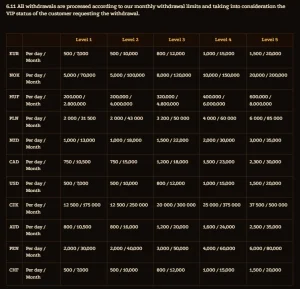
The amount may also be constrained by a withdrawal cap. A specialist review describes some non-UK-regulated casinos as setting daily, weekly or monthly withdrawal limits. Where a cap applies, a large win may have to be paid in instalments rather than as one transfer. The total amount due can remain unchanged while the time needed to receive it increases.
VPN-Friendly Casinos in the UK: Rules and Risks
A useful calculation separates the balance from the schedule: the balance is what the account shows; the schedule is the amount permitted per period and the number of periods needed to release it. If a limit is expressed per day, week or month, the relevant unit determines how instalments are spaced. A payment-time estimate alone cannot answer that question.
The same distinction applies across Anjouan casino sites: payment processing time and withdrawal limits are separate terms. One concerns how long a permitted transfer takes; the other concerns how much can leave the account during a stated period. Neither should be inferred from the deposit route or from a general claim that payouts are fast. The actual withdrawal conditions determine whether a balance can be accessed in one payment or only over a longer schedule.
New Anjouan Casinos and the Cost of Verification Delays
A newly launched Anjouan casino may have little operating history from which to judge how it handles withdrawals. A published payment policy is not the same as evidence that a withdrawal will be processed on schedule, particularly if identity checks begin only after a cash-out request.
Reported withdrawal timings conflict. Some accounts describe payments arriving within 24 hours to 5 business days; other reports say withdrawals can take three or four weeks. These are not interchangeable estimates, and neither should be treated as a guaranteed timetable. For non-UK-regulated casinos, there is no regulatory clock to enforce a stated processing period. A delay can therefore affect when funds become available without triggering a UKGC deadline.
Verification Delays
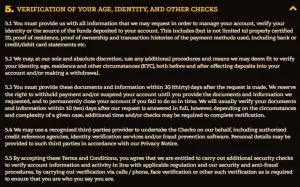
Some offshore operators may require notarised documents or video calls before releasing withdrawals, which can significantly extend processing times.
Verification can add another layer of uncertainty. A specialist review has reported that some offshore operators may request notarised documents or a video call before releasing a withdrawal. These are not established requirements across Anjouan casinos, and the procedures may differ between operators. But where such a demand appears, the practical cost is clear: preparing extra documents or arranging a call can extend the time before a payment is completed.
The relevant distinction is between a routine identity check and a requirement introduced or expanded at withdrawal stage. A newer site may have limited evidence showing how consistently it applies its published process, or how it handles additional requests. An account can remain inaccessible to its balance while the operator seeks further verification; a stated payment speed does not resolve that uncertainty.
For a prospective customer, the operational assessment is not simply whether withdrawals are advertised. It is whether the site explains its verification process before a deposit, what documents may be requested, and how delays are handled. Anjouan branding alone does not establish that a new operator’s checks will be predictable. Until the process is demonstrated in practice, the possible wait and the work required to complete verification belong in the cost calculation, not in the fine print.
Crypto and Other Payment Routes at Anjouan Casinos
Payment options at Anjouan casinos can include credit cards, e-wallets, bank transfers and cryptocurrency. Transactions may be routed through alternative processors, so the payment name displayed at checkout may not identify the company handling the transfer. Availability can also differ between depositing and cashing out.
USA Casinos for UK Players: UK Licensing Explained
A listed method confirms only that a deposit route is presented; it does not establish that withdrawals can be made through the same channel. The operator’s payment terms determine which routes are available for payouts, and a deposit option alone is not evidence of withdrawal access. That distinction matters when money enters through an intermediary rather than directly through a familiar provider.
Cryptocurrency has a separate UK consideration: it can be used to bypass the UK ban on gambling funded by credit cards. That describes a way the payment restriction may be circumvented, not a sign that the casino is UK-regulated or that the transaction carries equivalent consumer protections. Crypto also does not turn a deposit into a guaranteed or readily reversible payment.
Some offshore payment descriptions mention deposits charged to a mobile phone bill or taken from a prepaid balance. An affiliate review has described these routes, but their availability is not a settled feature of the market and may change by operator or over time. They should not be treated as standard options.
The useful comparison is therefore not the length of a cashier’s logo list. It is whether the terms identify the processor, state which methods can receive withdrawals, and explain what happens when the deposit route cannot be used for a payout. A method available at the deposit stage may be absent later; the difference belongs in the cost and access assessment, not in the marketing label.
Do
- Check if the terms identify the payment processor
- Verify which methods are available for withdrawals
- Review how delays are handled
Don’t
- Assume a deposit route is available for payouts
- Rely on a list of logos as proof of access
- Treat crypto as a source of consumer protection
What Casino Reviews Cannot Verify About Player Protection
An Anjouan casino review can describe published terms, available features and the operator’s stated policies. It cannot make those policies equivalent to protections attached to a UK-licensed service. A favourable rating is an assessment of the site, not a substitute for regulatory oversight or a remedy when something goes wrong.
The difference matters in responsible gambling and data handling. Non-UK-regulated casinos can operate under less demanding requirements in these areas than casinos licensed by the UK Gambling Commission. A site may advertise tools or privacy commitments, but a review cannot establish that their operation and enforcement match the standards applying to UK-licensed operators. The distinction is not cosmetic: a stated policy and an enforceable safeguard are different things.
There is also a specific loss of recourse. Someone gambling through an offshore casino cannot take a complaint to the UK’s Financial Ombudsman Service in connection with that service, and does not receive the mandatory responsible-gambling tools that apply through UK-regulated provision. A review cannot restore either access. Nor does a positive assessment give the UK regulator authority over a casino outside its system.
That makes review language worth separating into observable detail and assurance. Descriptions of account settings or the wording of a privacy notice can be checked against what a site displays. Claims that a casino is “safe” or “responsible” do not, on their own, demonstrate the strength of its standards or provide an independent route to redress. The label is not a protection.
The practical comparison is therefore not simply between review scores. It is between what a site says it provides and what regulatory structure stands behind that claim. At a non-UK-regulated casino, the UK safeguards and remedies are not available merely because a review describes the operator favourably. Any decision to use an offshore gambling service also carries responsibility for understanding the legal and practical implications of doing so.
Foreign Casinos for UK Players: Licensing and Risks
Offshore Licensing: Anjouan Among Other Jurisdictions
Anjouan sits within a varied group of jurisdictions associated with non-UK-regulated casinos. Malta, Curaçao and Gibraltar are also licensing locations in this landscape, but the shared label does not mean their rules, oversight or remedies are identical. A jurisdiction’s name identifies where an operator is licensed; it does not, by itself, establish how closely the operator is supervised or what protections a player can rely on.
That distinction matters when comparing offshore licensing. A casino may present its licence as a sign of oversight, yet the practical value of that licence depends on the regulator’s requirements and its role when problems arise. Similar-looking licence claims should not be treated as evidence of equivalent standards. Nor does the presence of a regulator’s name on a website establish that every aspect of the operator’s service is independently verified.
Payment terms can also make non-UK-regulated casinos appear more flexible. Some may permit deposits and withdrawals under less restrictive policies, potentially enabling faster payouts or fewer barriers. That is a commercial feature, not proof of stronger supervision. A permissive cash-out policy can coexist with weaker regulatory recourse; the two measure different things.
The same distinction applies when considering offshore casinos licensed in Anjouan alongside those licensed elsewhere. Comparing jurisdictions is useful only when the comparison concerns the actual oversight and remedies attached to each framework, rather than payment convenience alone. Deposit access does not establish that a particular route will also be available for withdrawals, and a faster stated process does not establish that it will be enforced by a regulator.
A licence jurisdiction is therefore one part of the assessment, not a universal quality rating. Payment flexibility describes what an operator may allow under its terms. Regulatory oversight describes the constraints and remedies surrounding that operator. Combining the two into a single judgement would make the comparison look simpler than it is.
What happens if I have a dispute with an Anjouan-licensed casino as a UK player?
The operator must respond to your complaint within 30 calendar days, but the Anjouan authority does not adjudicate player complaints. Anjouan-licensed casinos do not provide an independent dispute-resolution route comparable to UKGC-approved ADR.
Are sites that are not on GamStop legal for players in the UK to access?
Accessing a site that is not on GamStop is not itself a criminal offence for a UK player. However, operators serving customers in Great Britain need a UK Gambling Commission licence, and an Anjouan licence does not replace it.
Are gaming sites not on GamStop permitted for UK players?
UK law does not explicitly prohibit British citizens from using gambling services licensed in other countries, and players do not commit a criminal offence merely by using an unlicensed site. A casino serving customers in Great Britain still needs a UK Gambling Commission licence.
What Are Non UK Regulated Casinos?
They are online gambling sites that operate without oversight from the UK Gambling Commission, typically under a licence from another jurisdiction such as Malta, Curacao, Gibraltar or Anjouan.
Material created by the team Lizaro