
A payment option being available does not prove that deposits made with it qualify for a casino promotion.
Klarna, casino deposits and bonus eligibility
A payment method appearing in a casino’s cashier and a deposit qualifying for a promotion are separate conditions. The cashier concerns whether a route is offered for a transaction. Bonus terms determine whether money deposited through that route counts towards a particular offer. Neither condition proves the other.
That distinction matters when assessing claims about a casino bonus involving Klarna. A general statement that a site mentions Klarna, or that a payment option is available, does not establish that a Klarna-funded deposit is eligible for a welcome offer or another promotion. Eligibility needs to be stated in the terms for the specific offer. If the terms name eligible methods, that list governs; if they exclude particular methods, the exclusion matters even when those methods appear elsewhere on the site.
A promotion should therefore be read as a set of conditions, not as a headline attached to a deposit. The headline may describe an offer, but it does not settle which payment routes count. The relevant wording is normally found in the promotion’s terms, particularly any clause about payment methods, qualifying deposits or excluded transactions. Where the offer’s terms do not clearly address a method, its presence in the cashier is not a substitute for confirmation.
When considering a casino for Klarna, check the payment options available to you before depositing. The details provided here cover payout speed, but do not confirm Klarna availability.
1. Amunbet
Payout speed: 1-3 business days Amunbet has a stated payout speed of 1–3 business days. No information is provided here about whether it accepts Klarna.
2. Jetsetspins
Payout speed: 1-3 business days Jetsetspins has a stated payout speed of 1–3 business days. The available details do not specify Klarna support.
3. Dieselwin
Payout speed: 1-3 business days Dieselwin has a stated payout speed of 1–3 business days. Klarna availability is not specified in the information provided.
4. WinBeast
Payout speed: 1-3 business days WinBeast has a stated payout speed of 1–3 business days. No Klarna payment details are provided.
5. x3bet
Payout speed: 1-3 business days x3bet has a stated payout speed of 1–3 business days. The supplied details do not confirm whether Klarna is accepted.
6. Britsino
Payout speed: 1-3 business days Britsino has a stated payout speed of 1–3 business days. Klarna support is not covered by the available information.
7. EvoSpin
Payout speed: 1-3 business days EvoSpin has a stated payout speed of 1–3 business days. No information is provided about Klarna availability.
8. Chanze
Payout speed: 1-3 business days Chanze has a stated payout speed of 1–3 business days. The details provided do not say whether it accepts Klarna.
9. SpinFormula
Payout speed: 1-3 business days SpinFormula has a stated payout speed of 1–3 business days. Klarna availability is not specified here.
10. BeOnBet
Payout speed: 1-3 business days BeOnBet has a stated payout speed of 1–3 business days. The supplied information does not confirm Klarna support.
The distinction also prevents a second common error: treating every deposit into a casino account as a qualifying deposit. A transaction can fund an account without meeting the conditions for a bonus. The deposit may be outside the offer’s eligible methods, or the promotion may impose other stated conditions. Those are separate questions. The amount shown in the account balance does not, by itself, indicate whether a promotional credit has been triggered or whether the deposit counts towards an offer.
Payment-specific exclusions are not unique to Klarna. A specialist review of casino promotions describes PayPal as valued for speed and convenience while noting that some offers may exclude it. Specialist reviews also report that Skrill and Neteller are offered at some sites and can be excluded from promotions. These observations are not a rule for every casino or every offer. They illustrate why a method’s general reputation, availability or convenience cannot establish bonus eligibility at a particular site.
The same standard applies to any claim about a Klarna bonus. A page may discuss a payment service in general terms, while the offer itself applies only to selected routes. Conversely, terms may expressly include a method, but that statement applies only within the scope of the promotion and the conditions attached to it. A broad description should not be stretched into a promise that every deposit made through that service earns a bonus.
A useful reading separates three statements that are often blurred together:
- the casino lists a payment route;
- the promotion names that route as eligible, or leaves its treatment unclear;
- the deposit meets the offer’s remaining conditions.
Only the promotion terms can establish the second point. The third depends on the full set of conditions, not just the payment clause. If terms are silent or ambiguous about a method, the safe interpretation is not to assume that the deposit qualifies. An unclear condition has no reliable promotional value until the operator clarifies it.
This matters when comparing offers as well as when deciding whether a deposit qualifies. A bonus headline has a practical value only if the relevant transaction can meet its conditions. If eligibility depends on a particular payment route, then an offer that cannot be used with the intended route may be less useful than its headline suggests. The calculation is straightforward: promotional value is conditional, while the money deposited remains a real account transaction. Treating the headline as guaranteed value reverses that order.
Terms may also distinguish between an offer being available and a deposit being eligible for it. An account can display a promotion without confirming that every payment method qualifies. Likewise, an offer’s existence does not establish that it has been activated or that its conditions have been met. Those details should be checked in the offer wording and account information rather than inferred from the cashier.
For a claim that a casino supports Klarna and offers a related bonus, the decisive evidence is therefore not a general payment-method list or a promotional banner. It is clear wording connecting the payment route to the specific offer, together with the rest of that offer’s conditions. Without that link, the bonus should be treated as unconfirmed rather than included in the expected value of the deposit.
Attention: A payment method appearing in the cashier does not guarantee that deposits made through that route are eligible for bonuses; this must be confirmed in the specific offer’s terms.
What the cashier can confirm about Klarna deposits
A payment name in a casino’s general information is not the same as an available option at the point of deposit. The cashier is where the current choices and the conditions attached to them are displayed. For a Klarna deposit, the useful question is not whether the brand appears somewhere on the site, but whether the cashier offers a clearly identified Klarna route for that account and transaction.
The check should begin before money is entered. Open the deposit page and inspect the named methods rather than inferring support from a general statement about payments. A reference to cards or banking services does not confirm that Klarna itself is available. Nor does a payment logo establish that every account, device or transaction can use it. If the route is not shown as a selectable cashier option, the listed information does not establish that a Klarna deposit can be made.
Casinos That Accept Maestro in the UK: What to Check
Once a method is visible, select it only far enough to read the displayed instructions and limits. The cashier should make clear what information is required, the amount accepted for that transaction, and whether the payment is subject to any stated conditions. A method may have its own minimum or maximum that differs from the casino’s general deposit range. The figures shown at the payment stage are more relevant to the intended transaction than a summary on another page.
The listed minimum deposit across casino payment methods is described in a specialist casino review as falling within a £10–£20 range, with the selected method affecting the figure. That range is not a promise that a Klarna deposit will be accepted at either amount. The cashier’s displayed minimum is the operational condition for the selected route. If it differs from a general site description, the amount shown at the point of payment is the one to resolve before proceeding.
Limits can also depend on how the deposit is made and on account status. A cashier may distinguish between a per-transaction cap and broader daily or monthly limits; these should not be treated as interchangeable. A transaction limit concerns one payment, while an account-level restriction may affect further deposits. If the cashier presents a limit that does not fit the intended deposit, funding the account is not a useful way to test whether the restriction can be bypassed.
Do
- Inspect named methods on the deposit page
- Read method-specific limits and instructions
- Confirm the account currency before payment
Don’t
- Infer support from general site statements
- Assume a logo establishes universal availability
- Use a transaction to test payment restrictions
Currency is another field to check before submitting payment. Specialist casino pages describe GBP support, but the account currency still needs to be confirmed before the first transaction. A displayed balance in pounds does not by itself prove that the payment route will settle in pounds. If the cashier indicates another currency, conversion may affect the amount charged or credited. The currency and final amount should therefore be clear on the payment screen before authorisation.
A sensible inspection follows the sequence shown by the cashier:
- Confirm that the intended method is explicitly selectable, not merely mentioned in site-wide payment text.
- Read the method-specific minimum, maximum and any account-status restrictions.
- Check the account currency and the amount that will be charged.
- Review any instructions that explain how the payment must be completed.
- Stop if the route, amount or currency is unclear rather than treating an attempted transaction as a compatibility test.
The cashier can also show whether additional account steps apply before a deposit. Remote gambling operators must verify a customer’s age before allowing funds to be deposited, and UKGC rules require new customers to be prompted to set a financial limit before their first deposit. These are account controls, not evidence that Klarna is supported. A visible payment option does not remove either requirement.
A deposit form that advances to an external payment screen still needs to be read as part of the transaction. Check that the method and amount remain consistent after the hand-off, and do not assume that an abandoned or declined payment has been completed. The final confirmation should match the intended deposit. If the details change, or the payment instruction does not identify the expected route, the transaction has not been confirmed on the terms initially understood.
The practical distinction is between a method being mentioned and a deposit being available on defined terms. The cashier can confirm the option presented to the account, the applicable deposit conditions, and the currency and amount displayed before submission. It cannot make a broad payment reference more specific than it is. A decision to fund the account should rest on the transaction details actually shown, not on an assumption that a familiar payment brand will work in the same way across every casino.
Is Klarna available at UK online casinos?
Klarna should not be treated as a standard payment option across UK online casinos. Availability is determined by the payment methods offered to a particular customer in a particular casino, not by a general reference to Klarna elsewhere. A payment service may be discussed in a review or appear alongside card brands without being available for gambling transactions.
Casinos That Accept Litecoin in the UK: What to Check · Casinos That Accept Zimpler in the UK: What to Check
That distinction matters because a casino’s payment page can mention Visa and Mastercard while the actual cashier offers a different set of routes. A specialist casino review may list those card brands, but that does not establish that every UK customer can use them at the time of payment, or that every card product is eligible. The cashier is the relevant confirmation for the account in question.
The same standard applies to Klarna. A general statement that a casino supports cards, digital payments or a particular payment provider does not confirm that Klarna itself is accepted for a casino deposit. Nor does an option appearing on a general information page establish that it remains available to UK customers. The named method needs to appear as an active choice in the casino’s own payment interface.
This leaves a narrower answer to whether Klarna can be used at UK online casinos: it cannot be assumed from a broad claim or from a brand association. A confirmed option would need to be presented by the casino as a supported payment route for the relevant account. Without that confirmation, describing a site as a Klarna casino would turn a possibility into a claim.
Searches for the best UK casinos accepting Klarna can therefore produce a misleadingly definite impression. Rankings and payment summaries may flatten important distinctions between a provider, a card network and the specific product a customer holds. They can also become outdated as payment arrangements change. A list that names a payment brand is not equivalent to a live cashier selection.
Confirmed Klarna availability requires the method to appear as an active, selectable choice within the casino’s own payment interface for the specific account.
The wording of the option matters as well. A casino may offer card payments without identifying Klarna as the route, while a payment service may provide more than one product. A broad reference to one does not prove that another is enabled for gambling. This is a question of actual availability, not a naming convention.
For a sound answer, the evidence is simple: the casino’s own cashier must display Klarna as an available method for the account. A general mention of cards or payment services is not enough. Until that distinction is established, claims that a casino accepts Klarna should be read as unconfirmed rather than as a usable deposit option.
Klarna cards, debit cards and UK gambling payment rules
A payment card’s logo identifies a card network, not the rules attached to the card product. Visa and Mastercard appear on lists of casino payment methods, but that does not establish that every card carrying either logo can fund gambling. The card’s classification and the source of its funds matter.
The UK prohibition is specific: remote gambling operators cannot accept credit-card payments for gambling. The regulator introduced the ban on 14 April 2020, and it remains in force. It applies even when a credit-card payment is routed through a money service business. A familiar brand, a digital wallet or an intermediary does not turn credit into debit.
Casinos That Accept Solana in the UK: What’s Verified · UK Casinos That Accept iDEAL: Deposits and Terms
That distinction matters when a payment service is associated with more than one way to pay. A card linked to a service should not be treated as eligible merely because the service itself is mentioned as a payment option. The relevant question is whether the particular card product is a debit card permitted for gambling payments, rather than a credit facility or a route that uses credit-card funds. A card’s appearance in a wallet does not settle that question either: remote gambling operators cannot accept wallet payments where the wallet allows credit-card funds to be used for gambling.
For Klarna-branded or Klarna-associated cards, the name alone therefore cannot establish that a UK casino can accept the card. Nor does a card’s Visa or Mastercard branding prove that it is a debit product. The payment service, the card type and the funding source are separate details; treating them as interchangeable produces a misleading answer.
A specialist review may list Visa or Mastercard among a site’s payment methods. That is a general description, not confirmation that a specific card product is currently available to UK customers or eligible for gambling transactions. The actual card and account conditions still matter. A general reference to Klarna payments is not evidence that a casino accepts a Klarna card, and a mention of a card network is not evidence of Klarna compatibility.
The practical dividing line is not whether a card looks like a conventional bank card, or whether it carries a widely recognised logo. It is whether the payment is classified and funded as an allowed debit-card transaction. Where the card uses a credit facility, the gambling prohibition applies; changing the route through a wallet or payment intermediary does not remove it. Where the product is debit-based, that still does not guarantee that a particular casino supports it.
Credit Card Ban
Remote gambling operators in the UK are prohibited from accepting credit-card payments for gambling, including those routed through digital wallets.
This is why claims about casinos accepting Klarna cards need more than a brand name. A payment option must be assessed by its actual product and funding arrangement, within the UK rule against credit-card payments for gambling. A card described simply as “Visa”, “Mastercard” or “Klarna” leaves the decisive detail unresolved.
Slots and payment-method restrictions in Britain
A payment method and a slot game are separate parts of a casino account. Whether a cashier displays a particular deposit route does not change the rules governing online slots, and a game’s availability does not establish that a specific payment route can fund it. The applicable controls concern the gambling product and the customer, not the branding attached to a payment service.
In Britain, online slot autoplay is banned. Each spin must be initiated separately; a setting that starts successive spins without a fresh player action is not permitted. A spin must also last at least 2.5 seconds. These requirements apply regardless of whether the account was funded by card, bank transfer or another method. A faster payment does not permit faster slot play.
The maximum stake depends on the player’s age. For customers aged 25 and over, the limit is £5 per game cycle. For those aged 18 to 24, it is £2 per game cycle. The £5 limit for customers aged 25 and over took effect on 9 April 2025. These are stake ceilings, not recommended amounts or indications of likely returns. A casino cannot use a payment promotion or a different deposit route to raise the applicable maximum.
Casinos That Accept Ukash in the UK: What to Check · Monzo at UK Casinos: What Payment Evidence Confirms
That distinction matters when a search for Klarna-funded slot play becomes a request for a game list. Payment branding does not identify which slots are offered, and it does not show that a particular game can be played using a particular deposit route. Nor does a mobile version of a casino change the slot rules: autoplay remains prohibited, and the minimum spin duration remains in force.
Casino terminology can also blur separate controls. A deposit method concerns how funds enter an account; a slot’s stake is the amount committed to a game cycle. The two figures should not be treated as interchangeable. A larger deposit does not increase the permitted stake, while a low stake does not establish that a payment method is supported.
For remote gambling in Great Britain, operators offering real-money casino games must hold the relevant UK Gambling Commission licence. The Gambling Act 2005 applies in England, Wales and Scotland, while Northern Ireland has a separate legal framework. The presence of a slot title or payment logo alone does not establish the regulatory status of the site offering it.
The practical distinction is therefore straightforward: slot rules govern how the game may be played, while payment conditions govern whether funds can be transferred through a particular route. Neither answers the other question. A cashier listing cannot alter age-based stake limits or the ban on autoplay, and slot availability cannot confirm payment compatibility.
Payment alternatives when Klarna is unavailable
The practical alternatives differ in what they allow and how much of the payment route they leave available after a deposit. A method that accepts funds at the cashier is not automatically suitable for every transaction, so the relevant comparison is between card access, bank-linked transfers, deposit-only vouchers and e-wallets.
Debit Cards
Direct route from bank accounts via Visa or Mastercard, provided the card is a permitted debit product.
Open Banking
Bank-linked transfers that can support instant deposits and fast withdrawals at many sites.
Paysafecard
Prepaid vouchers used strictly for deposits, offering no route for withdrawals.
E-wallets
Services like Skrill and Neteller that provide a separate account balance but may be excluded from promotions.
Debit cards are a familiar option at UK casinos, with Visa and Mastercard commonly accepted. They provide a direct route from a bank account, without requiring a separate wallet balance or voucher purchase. Their main limitation is that the card must be a debit card eligible for gambling payments; a payment brand alone does not establish that a particular card product will work.
Open banking and bank transfers connect the transaction to a bank account rather than a prepaid balance. A specialist review reports that these routes can support instant deposits and fast withdrawals at many sites, but that is not a promise about every casino or account. Bank-linked methods may therefore be worth comparing where movement in both directions matters, while the actual availability and timing remain specific to the operator.
Paysafecard has a narrower role: it is a prepaid voucher for deposits only. That makes it a poor fit where the same route is expected to handle a later payout. Its function is clear, but the missing withdrawal leg is a material condition, not a minor interface detail.
E-wallets provide another alternative where a casino supports the relevant service. Skrill is described by a specialist review as one of the more common deposit methods at UK-friendly casino sites in 2026. That is an attributed snapshot, not a guarantee that a particular cashier will offer it. Skrill and Neteller may also be excluded from promotions, so the deposit method can affect more than the payment itself. Any wallet route must comply with UK rules: remote gambling operators cannot accept wallet payments where the wallet permits credit-card funds to be used for gambling.
Casinos That Accept AstroPay in the UK: Payment Terms · Casinos That Accept Upaycard in the UK
There is no single best Klarna alternative for every purpose. A debit card offers a direct bank-linked deposit route; open banking and transfers may offer movement in both directions where supported; a voucher is deposit-only; and an e-wallet adds a separate account and its own terms. The useful comparison is the permitted transaction direction, the account’s eligibility and any promotion conditions—not the payment brand’s familiarity.
How to verify payment compatibility before depositing
A general statement that a casino supports Klarna does not establish that a particular Klarna product will work for a particular account. Compatibility has three separate parts: the casino must offer the route, the payment product must be eligible, and the account must be able to use it. A claim about one part does not settle the others.
Payment references need to be read precisely. A mention of Klarna does not necessarily mean that a Klarna card, debit card or payment service is accepted for gambling transactions. Nor does a list of card brands confirm that every card carrying those brands is eligible. A specialist review may list Visa and Mastercard, but current UK availability and the eligibility of a specific card product still need to be established in the casino’s own cashier.
The account matters as well. A payment option may appear in general information without being available to every customer or account. The useful confirmation is the route shown for the logged-in account, not a broad description on a review page or a payment logo elsewhere on the site. If Klarna is not presented as a selectable payment method, its name in promotional or general payment material is not evidence that a Klarna deposit can be made.
Verify Payment Compatibility
- Identify the exact Klarna product being used
- Confirm the route is selectable in the account cashier
- Ensure payment method ownership matches the casino account holder
- Verify the operator holds a valid UK Gambling Commission licence
Ownership details are another compatibility check. The casino account and payment method should belong to the same customer, with matching basic details. That reduces avoidable friction when a transaction is checked. The cleanest arrangement is often one named account used consistently for deposits and withdrawals; adding another person’s payment details creates an ownership mismatch rather than a workaround.
Before funding an account, the relevant checks are therefore specific: identify the exact payment product, confirm that it is offered in the account’s cashier, and ensure that its registered owner matches the casino account holder. A card’s brand alone cannot answer those questions. The same applies to a claim that a casino “takes Klarna”: the wording is not a substitute for the payment route actually available to that customer.
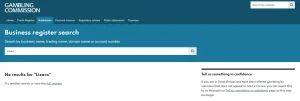
For a UK-facing casino, payment compatibility should sit alongside a separate licence check. Remote gambling licensees serving Great Britain must hold the relevant UK Gambling Commission licence, and the licence number can be checked on the Commission’s public register. That confirms the operator’s regulatory status, not whether a particular payment product will work; the two checks answer different questions.
If the payment route is unclear, the transaction should remain unfunded until the operator clarifies whether that exact product is accepted for the account. This avoids treating a general brand reference as a confirmed route and keeps the payment record aligned with the customer’s own account details.
Why casino withdrawals usually do not go back through Klarna
A deposit route and a withdrawal route are not automatically the same service. A cashier may let an account be funded through a particular payment option without offering that option for payouts. For a Klarna-related deposit, that distinction matters: the presence of Klarna at the deposit stage does not establish that winnings can be sent back through Klarna.
Casinos That Accept Boku in the UK: Deposit Guide · Casinos That Accept Wirecard in the UK: What to Check
UK anti-money laundering rules generally require gambling payouts to return to the original payment source. This closed-loop approach helps establish where deposited funds came from and where returned funds are going. It is also a common anti-fraud control. The practical result is that the casino may direct a payout to the source used for the deposit, rather than to a newly selected method.
That principle does not confirm that Klarna is supported for withdrawals, or that a Klarna-branded card can receive a gambling payout. The payment product, the casino’s cashier rules and the account’s available withdrawal options all matter. A deposit made through one route may also leave the cashier requiring another route or further checks before releasing funds. Alternative payout arrangements can involve additional verification.
Payment routing and withdrawal speed are separate questions. A method being used for a deposit says nothing by itself about how quickly a withdrawal will be approved or delivered. Internal casino checks, payment-provider handling and the destination account are distinct stages; the original-source rule concerns the route, not a promised processing time. “Instant withdrawal” language therefore needs to be read as a claim about a specific stage and payment option, not as proof that funds will immediately reach a Klarna account.
The same caution applies to searches for casinos offering Klarna deposits and withdrawals, or for a direct withdrawal to Klarna. Those descriptions do not establish a working payout route for a particular account. The cashier’s withdrawal screen and the operator’s payment terms are the relevant places to confirm the available destination before relying on it.
A payment brand is not evidence of a payout facility, and a deposit confirmation is not a withdrawal timetable. For UK-facing real-money gambling, the operator must also hold the appropriate UK Gambling Commission licence; payment options do not establish that status.
Withdrawal Realities
- Payouts generally must return to the original payment source due to AML rules
- Deposit availability does not guarantee that a method is supported for withdrawals
- Original-source rules concern the route, not the processing speed
- Withdrawal options must be confirmed via the cashier and operator terms
Deposit amounts, limits and the cost of payment
The minimum shown for a deposit is a condition of the selected payment route, not a general price for opening or using a casino account. A specialist review gives £10–£20 as a common starting range, while noting that the figure depends on the payment method. The cashier’s displayed minimum is the operative amount for that transaction; a search for a £5 Klarna deposit does not establish that such a minimum is available.
Maximums can also differ by payment method and account status. A casino may set separate limits for a single transaction and for activity across a day or month. Those limits can change, so a figure published elsewhere should not be treated as a standing allowance. The amount entered must fall within the cashier’s current range, and the account’s own financial controls remain relevant to budgeting.
The amount deducted can be higher than the deposit entered. Possible components include a casino charge, a payment-provider fee, a bank or card-issuer charge, a currency-conversion spread and, where relevant, a network fee. Not every payment carries each cost, and a fee-free label at one stage does not establish that the full transaction is cost-free.
Currency conversion deserves separate attention. If the account and payment use different currencies, the conversion rate may include a spread: the difference between the rate applied and the reference rate. A specialist review notes that this spread can exceed a visible flat fee. The comparison therefore needs to include the amount ultimately debited or credited, not just the line item described as a charge.
There is no universally cheapest method. For the same deposit amount, the total can depend on casino terms, provider pricing, bank or issuer charges, currency and network costs. A Klarna reference, a casino deposit bonus, or a claim about a no-deposit offer does not answer the cost question: those labels do not state the applicable minimum, maximum or transaction fees. The useful comparison is the final cost for the intended amount, in the account currency, under the terms displayed for that payment.
Casinos That Accept Poli in the UK: What to Check
GamStop status and the limits of payment-method claims
Klarna’s presence in a casino’s payment information cannot establish whether that casino is connected to GamStop. Payment acceptance and self-exclusion status are separate matters: a payment brand, deposit option or claim about fees does not show whether a site is covered by a particular exclusion scheme. The same applies to claims about Klarna casinos being “not on GamStop”. That description needs evidence about the operator, not an inference from its cashier.
A casino’s own account controls are not proof of GamStop status either. UK Gambling Commission rules require remote gambling licensees to offer self-exclusion tools and to prompt new customers to set a financial limit before their first deposit. They must also make account-level limit controls accessible. These are regulatory account protections; their presence does not, by itself, confirm that a casino is registered with or connected to GamStop.
The distinction matters because payment branding can be reused in broad promotional statements. A page might mention Klarna, describe a casino as unaffected by GamStop, or call a site fee-free, but those are separate claims. None verifies the others. A payment route also cannot show whether a particular account is eligible to use it.
For a UK-facing real-money casino, the relevant regulatory check is its current UK Gambling Commission operating licence. Remote gambling licensees serving the British market must hold the relevant licence, and the licence number can be checked on the Commission’s public register. That confirms regulatory status, not a payment method’s availability and not, on its own, a site’s GamStop connection.
Accordingly, “Klarna casino” and “GamStop status” should be assessed independently. Self-exclusion coverage cannot be inferred from a deposit option, and account limit settings cannot substitute for confirmation of that coverage. Treating one as evidence of the other turns a payment detail into a claim it was never designed to establish.
Why must withdrawals return to the deposit method?
Returning funds to the original payment source is a common anti-fraud and anti-money-laundering control. Using the same account for deposits and withdrawals can also reduce avoidable ownership checks.
What is the fastest withdrawal method for UK casinos?
PayPal, open banking services and debit cards linked to fast payout systems are generally among the quickest. Actual payout speed also depends on the casino’s approval process and whether your account is verified.
Do UK casino withdrawals require verification?
Verification may be completed before a withdrawal is approved, particularly for a first withdrawal. Having a fully verified account can help avoid delays.
Which payment methods are accepted in Great Britain?
UK casinos commonly accept debit cards such as Visa and Mastercard, and may also offer PayPal, open banking or bank transfers, Paysafecard, Skrill and Neteller. Some UKGC-licensed casinos accept Apple Pay; check the cashier for current options.
Are Visa and Mastercard deposits definitely debit cards?
No. Visa and Mastercard are card networks, and the card product’s eligibility must be checked in the cashier. Credit-card gambling has been banned in the UK since 14 April 2020.
Why can a fast payout casino still delay my withdrawal?
A casino’s internal approval process can add time, and a first withdrawal may take longer while verification is completed. Payout speed also depends on whether your account is fully verified.
Are fast casino withdrawals guaranteed?
No. Withdrawal speed depends on the casino’s approval process and your verification status; bank transfers can also be affected by cut-off times and weekends.
Material created by the team Lizaro