

For a UK reader, Lizaro should not be judged with a simple “safe” or “scam” label. The strongest current signals are more specific: Lizaro’s own Terms v1.12 exclude United Kingdom residents from opening accounts or adding funds, and no Lizaro UK Gambling Commission licence was verified in the current public register check. Public sources also disagree over offshore operator or licence details, so this guide does not present a specific offshore licence holder as settled fact. Against those concerns, Lizaro does publish KYC controls, a 24/7 support route and an email-based self-exclusion process.
The practical question is therefore which protections are actually verified, where friction has been reported and which UK protections should not be assumed. For UK readers, the current access restriction is already a decisive constraint: this page is a trust assessment, not an invitation to register.
UK trust snapshot
The most important trust signals are the UK restriction and absence of a verified UKGC licence
- UK access: current Lizaro terms expressly exclude United Kingdom residents from opening accounts or adding funds.
- UKGC status: no Lizaro licence was verified in the current UK Gambling Commission public register.
- Offshore transparency: public third-party sources conflict over operator and licence details, so no specific offshore licence is treated here as settled.
- Safer-gambling route: Lizaro publishes an email self-exclusion process through [email protected].
- Reputation signal: public review profiles contain substantial withdrawal-related complaints, which should be treated as sentiment evidence rather than proof of every allegation.
A practical trust-factor matrix for Lizaro
A useful safety assessment separates facts that can be independently checked from claims that remain unclear. It also distinguishes brand controls from protections that come specifically with a Great Britain licence. The table below uses that structure rather than assigning an artificial percentage score.
| Trust factor | Current evidence | Confidence | Why it matters |
|---|---|---|---|
| UK eligibility | Official Lizaro terms exclude United Kingdom residents. | High | A UK reader should not treat a visible website or registration button as permission to open or fund an account. |
| UKGC licence | No Lizaro licence entry was verified in the current UKGC public register. | High | UKGC licensee protections and obligations should not be attributed to Lizaro without a register hit. |
| Offshore operator or licence | Third-party sources conflict on the underlying operator and licence details. | Low | A licence holder, licence number or jurisdiction should not be stated as settled until directly verified. |
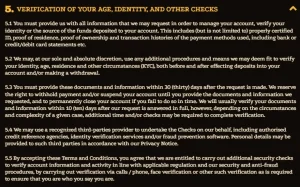
| KYC controls | Official terms describe identity, residence, payment and source-of-funds checks. | High | Documented controls are relevant to fraud prevention, but can also create payment friction if a review is incomplete. |
| Support | 24/7 live chat and support email are documented in public Lizaro materials. | High | Access to support matters when an account, verification or withdrawal issue needs a response. |
| Self-exclusion | Lizaro publishes an email route to request account closure for self-exclusion. | High | A direct exclusion route is a relevant safer-gambling control, but it is not the same as verified participation in UK multi-operator schemes. |
| Public complaints | Public review profiles show substantial withdrawal-related complaint sentiment. | Medium | Repeated themes can be a warning signal, but individual reviews are not proof that every allegation is true. |
Why the UKGC register matters more than a generic licence badge
For Great Britain, the UK Gambling Commission public business register is the primary place to verify whether an operator holds a current licence in the market. The register was updated on 10 September 2026. A current register check did not verify a Lizaro business, trading-name or domain entry that establishes a UKGC licence.
That result does not by itself prove fraud or answer every question about the brand’s operations elsewhere. It does answer a narrower and important question: this guide cannot describe Lizaro as UKGC-licensed or imply that UKGC licensee protections apply to Lizaro. The detailed Lizaro licence status page separates the Great Britain register result from the unresolved offshore information.
A UKGC register hit would materially change the trust analysis because it would identify a licensed legal entity and bring the operator within the Commission’s licence conditions and codes of practice for the relevant activities. Without that hit, those protections should not be imported into a Lizaro review by assumption.
Self-exclusion exists, but UK multi-operator protection should not be assumed
Lizaro’s responsible-gaming page says a customer can request self-exclusion by emailing [email protected] and that the account will be closed as soon as practicable. The current terms also include a self-exclusion clause using the same support email. That is a verifiable brand-level control.
Great Britain has an additional regulatory layer for licensed remote gambling. The UK Gambling Commission’s remote multi-operator social responsibility code says in-scope remote licensees must participate in the national multi-operator self-exclusion scheme. Because no Lizaro UKGC licence was verified, this guide does not attribute that UK multi-operator protection to Lizaro.
The distinction matters for users who think all self-exclusion tools work across the same network. An operator’s own email-based closure process is not automatically equivalent to a regulator-mandated multi-operator scheme. Readers should evaluate exactly which protection is evidenced rather than treating the word “self-exclusion” as proof of a particular UK system.
KYC controls add protection but can also create account friction
Lizaro’s official terms document identity, age, residence, payment-ownership and source-of-funds checks. Those controls are relevant to account security and fraud prevention. They also allow the operator to withhold payment or suspend an account while requested verification remains incomplete.
The terms require requested information within 30 days and say verification is usually completed within 10 days after a complete response, with extra time possible for more complex cases. That gives readers a concrete framework for judging whether a verification issue is still inside the operator’s published process. The separate Lizaro KYC guide covers the document categories and timing in detail.
KYC should not be mistaken for a substitute for licensing. A brand can publish identity controls without holding a Great Britain operating licence, and a successful KYC check does not override a country restriction. Safety analysis therefore needs both layers: what controls the operator uses and what external regulatory framework is verified.
Withdrawals are the main recurring complaint theme to monitor
Lizaro’s terms say withdrawal requests are worked through by the financial department within three business days when other conditions are met and checks are complete. The same terms allow withdrawal processing to be delayed for identity, source-of-funds and compliance checks. Those clauses explain why the published process contains conditional steps rather than one unconditional payout deadline.
Public user-review profiles contain many complaints about withdrawal delays. That is a meaningful reputation signal because repeated themes can show where customers experience friction. It is not proof that every complaint is accurate, that every delay breaches the terms or that the same cause applies to every case. Reviews should be read alongside dated terms, account-specific evidence and any operator response.
Our Lizaro withdrawals guide deals with the current payment rules, while the Lizaro complaints page focuses on how to interpret complaint patterns, including the difference between unresolved allegations and cases where a brand has responded.
Support availability is positive, but responsiveness matters too
Lizaro provides live chat and email support, with 24/7 availability documented for the brand. That is a useful operational signal because customers dealing with KYC, account restrictions or payment queries need a route to contact the operator. The responsible-gaming page also relies on the support email for self-exclusion requests.
Availability alone does not establish service quality. Public reviews contain both positive and negative support experiences, including complaints connected to delayed withdrawals. Those reports are best treated as sentiment rather than as a substitute for verified response-time data. A sound trust assessment therefore gives Lizaro credit for having documented support channels without turning that into a guarantee that every issue will be resolved quickly.
What the current UK restriction changes about the safety question
For a UK resident, the present country restriction is more fundamental than many product-level safety comparisons. The Lizaro UK access page documents that the current terms list the United Kingdom among excluded jurisdictions and say residents may not open accounts or add funds. That means a UK reader does not need to decide whether a particular bonus, game or payment method is attractive enough to justify registration under the current terms.
This also changes how historical reviews should be read. Some GB-tagged reviewers describe deposits or withdrawals, but that cannot override the current official country clause. The correct conclusion is not that those reports are fabricated; it is that they are weaker evidence of present eligibility than the dated terms now in force.
What a stronger trust profile would look like
Several pieces of evidence would materially improve the clarity of the Lizaro trust picture. The first would be a verified UKGC register entry if the brand intended to serve Great Britain. The second would be a directly verifiable offshore operator and licence record that resolves the conflicting third-party descriptions. The third would be a public complaint history showing fewer unresolved withdrawal themes over time.
Those are observable changes rather than subjective impressions. They would make it easier to connect the consumer-facing brand to an accountable licensed entity, understand which dispute and safer-gambling rules apply and assess whether payment complaints are an isolated pattern or a persistent one. Until then, the evidence supports a cautious trust assessment rather than a blanket label.
Primary and current sources used for this trust check
- Lizaro General Terms and Conditions – current UK restriction, KYC and withdrawal controls.
- Lizaro Responsible Gaming – self-exclusion and support route.
- UK Gambling Commission business register – current Great Britain licence verification source.
- UKGC remote multi-operator self-exclusion code – requirement for in-scope remote licensees.
The trust signals UK readers should weigh most heavily
The Lizaro UK review brings the same evidence together across access, payments and product pages. The strongest evidence is not a star rating. It is the combination of a current official UK exclusion, no verified UKGC licence, unresolved offshore licence transparency, documented KYC and support controls, a direct self-exclusion route and a public complaint pattern in which withdrawals appear frequently. For a UK reader, the first two factors carry the greatest weight because they define whether the brand is operating within the access and regulatory framework a British customer would normally expect. The remaining signals help explain how the service handles identity, support and payments, but they do not replace the missing UK licence verification or cancel the current country restriction.
For a UK reader, local protections need to be evidenced rather than assumed. Support channels and self-exclusion features can still be useful, but they do not substitute for verified UKGC oversight, verified GAMSTOP participation or a confirmed UK alternative dispute resolution route. Keeping those categories separate makes the trust assessment clearer.
Lizaro UK Guide is an independent editorial information resource and is not the casino operator.
Material created by the team Lizaro